MARTIN MAWAYA
The introduction of the Farm Ranger livestock monitoring system is being hailed as a potential turning point for Zimbabwe’s cattle industry.
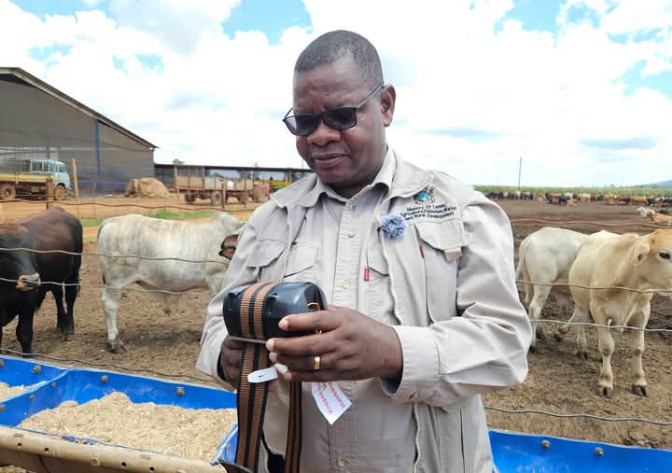
The farm ranger tool offers farmers the ability to track livestock movement, monitor dipping schedules and manage grazing boundaries using GPS-enabled collars and digital platforms.
For a sector long battered by disease outbreaks, stock theft and climate shocks, officials say the technology could help usher Zimbabwe’s livestock production into a new era of smart farming.
Permanent Secretary in the Ministry of Lands, Agriculture, Fisheries, Water and Rural Development, Professor Obert Jiri said modernizing livestock management was critical if Zimbabwe is to unlock agricultural growth and achieve its Vision 2030 targets.
“The Farm Ranger tool is a critical management instrument that allows farmers to track the movement and activities of livestock on the farm,” Jiri said.
“The agricultural sector must embrace modernization, including the use of technology in livestock management, to achieve Vision 2030 goals.”
The technology enables farmers to set digital grazing boundaries and receive alerts if animals stray beyond designated areas.
It also allows farmers to monitor herd behaviour in real time and respond quickly if livestock display unusual movement patterns that could signal illness, theft or predator attacks.
The system is gaining attention at a time when Zimbabwe’s livestock sector continues to suffer devastating losses from tick-borne diseases, particularly theileriosis commonly known as January disease.
Figures from the Lands Ministry, shows that thousands of cattle die from the disease every year, with more than 500 000 cattle having succumbed to theileriosis since 2016, representing economic losses estimated at over US$250 million.
The disease, caused by the parasite Theileria parva and spread by ticks, thrives during the rainy season when tick populations multiply rapidly.
For many smallholder farmers, losing even a single animal can mean the collapse of an entire household livelihood.
For Gweru farmer Blessing Sibanda, the technology represents a solution to a problem that has haunted livestock farmers for years.
“Sometimes cattle disappear into the bush for days and you only discover later that they were stolen or attacked by predators,” Sibanda said while watching a demonstration of the tracking system.
“If you can see where your animals are at any time on your phone, it changes everything. It means fewer losses and better control of your herd.”
For Sarah Moyo, a small-scale livestock farmer from Concession, the system also offers hope in the fight against livestock diseases that have repeatedly wiped out cattle in communal farming areas.
“As farmers we lose many cattle to January disease, especially during the rainy season,” she said.
“If we can track grazing areas and ensure animals are dipped properly and not moving into risky areas, it will help us protect our herds.”
Livestock specialists say digital monitoring systems can help farmers detect unusual herd behaviour early often one of the first warning signs of disease outbreaks.
By improving the timing of dipping and controlling animal movement, the technology could reduce exposure to tick-infested grazing zones that spread January disease.
Beyond disease control, experts say the system could also support Zimbabwe’s shift toward climate-smart agriculture, a model aimed at increasing productivity while helping farmers adapt to climate change.
Zimbabwe has experienced frequent droughts and erratic rainfall patterns in recent years, shrinking natural grazing areas and forcing farmers to manage livestock more carefully.
Digital livestock monitoring systems allow farmers to manage grazing rotations more efficiently, reducing overgrazing and protecting fragile rangelands.
Jiri said government was encouraging farmers to adopt climate-smart farming practices, including investing in irrigation and embracing new technologies to improve efficiency.
“Zimbabwe’s agricultural sector is poised for growth as the government pushes for climate-smart practices,” he said.
Across the world, similar technologies are already reshaping livestock production.
In countries such as Australia and the United States, ranchers use satellite tracking and smart collars to monitor herds across vast grazing landscapes, reducing labour costs while improving animal health and productivity.
In South Africa, digital livestock monitoring technologies are widely used in wildlife and livestock ranching to track animals, prevent poaching and improve herd management.
For Zimbabwe, where cattle remain central to rural livelihoods, experts say adopting such technologies could unlock new growth in the livestock sector.
Cattle provide draught power, milk, meat and income for millions of households, yet productivity has remained below global standards due to disease outbreaks, poor herd monitoring and climate pressures.
Agriculture analysts argue that combining digital livestock monitoring, improved veterinary services and climate-smart practices could significantly strengthen Zimbabwe’s livestock economy.
Standing beside his grazing herd, Sibanda said the future of farming may well depend on how quickly farmers adapt.
“Farming is changing,” he said.
“If technology can help us protect our animals and grow our herds, then it is something every farmer should start embracing.”