-Baba naMai Hazvi from vendor to fame
Rutendo Chirume
For many Zimbabweans scrolling through Facebook, TikTok or YouTube, the sight of Baba Hazvi arguing over who deserves the biggest piece of chicken is enough to spark laughter.

His commanding voice, strict household rules and humorous exchanges with his ever-patient wife, Mai Hazvi, have become a signature that thousands of followers eagerly anticipate. Yet behind the comedy lies an inspiring story of resilience, faith and determination.
Mike Mafunyise, popularly known as Baba Hazvi born in 1987, and his wife Angline Gava (31) known to fans as Mai Hazvi never imagined they would one day earn a living through social media. Interestingly, “Hazvi” is simply the name of a character they created for their skits it is not the name of any member of their family.
Before becoming social media personalities, the couple lived in South Africa where they struggled to make ends meet. Angline survived through buying and selling while Mike took on various odd jobs and hustles in search of income. Like many Zimbabweans in the diaspora, they worked tirelessly, but life remained difficult.
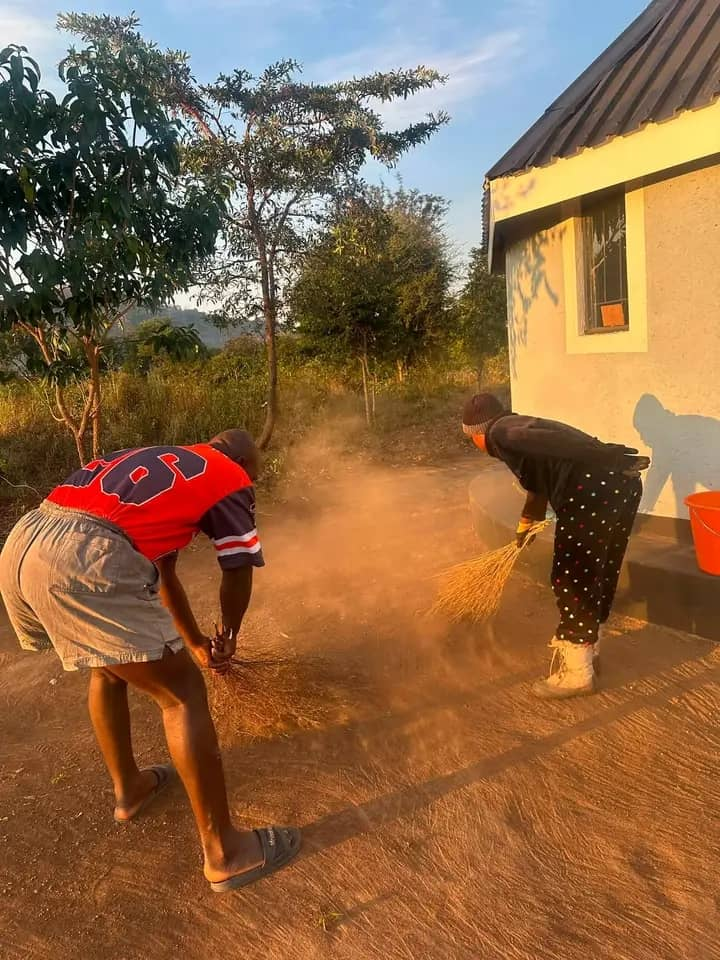
“There were days when we would ask ourselves how we were going to survive the next day,” recalled Baba Hazvi. “My wife was doing buying and selling while I hustled wherever I could, but it was still not enough. We knew we had to find another way to change our lives.”
Their breakthrough came unexpectedly after watching fellow Zimbabwean content creators Tytie and Kikie share how they were earning a living through social media.
“That conversation opened our eyes,” said Baba Hazvi. “We looked at each other and said, ‘If they can do it, why not us?’ We realised that ordinary people like us could also tell stories and earn from them.”
Inspired, the couple took a leap of faith and started creating content in 2024 using nothing more than a mobile phone and determination.
The journey was anything but easy.
“Our first videos were of very poor quality and sometimes we couldn’t even afford data to upload them,” Baba Hazvi said. “But we refused to give up because we believed consistency would eventually pay off.”
Mai Hazvi admitted that they were initially nervous about putting themselves in the public eye.
“At first people didn’t know us and we wondered whether anyone would even watch our videos,” she said. “But we kept encouraging each other to stay focused and keep improving.”
Their persistence soon paid off.
Today, The Hazvi Family has grown into one of Zimbabwe’s recognised social media brands, with thousands of followers on Facebook through the Mai Hazvi page, as well as on TikTok and YouTube both titled The Hazvi family.

At the centre of their success is a family dynamic that many Zimbabweans find both hilarious and relatable.
In their skits, Baba Hazvi portrays a strict but caring husband who insists on controlling every aspect of the household, even deciding who deserves which piece of chicken during meals. Though he appears tough and uncompromising, his character always reveals a loving father and husband determined to provide for his family.
“People laugh when they see me being strict,” he said with a smile. “But that is just the character. Behind every joke there is a lesson.”
Mai Hazvi complements the role perfectly. While she often finds herself at loggerheads with her husband, she portrays a patient, respectful and understanding wife whose calmness balances the household.
“Our skits are meant to entertain, but they also teach families about respect, communication and love,” she explained. “Many couples tell us they see themselves in our videos, and that encourages us.”
Success on social media has transformed the family’s fortunes.
The income from content creation enabled them to return home permanently in January this year after years in South Africa. Back from where they come from, Ward 17, Neromwe, Chiredzi, they have built a home and invested in sustainable projects, including a borehole, a nutrition garden and a poultry project that now supplements their income.
“We are grateful because social media changed our lives,” said Baba Hazvi. “It gave us an opportunity to come back home and build something for our children.”
Parents to three children aged 18, 12 and 11, the couple say they remain focused on growing their brand while inspiring others.
However, Baba Hazvi warns aspiring content creators against chasing quick fame.
“Content creation is not easy. Everyone is doing content now, so you must find your own niche. Don’t copy other people. Find what makes you different and believe in it.”
He also discouraged upcoming creators from depending entirely on established influencers.
“Start on your own. Don’t wait for someone famous to promote you because that is where monopoly and control can come in. Build your own audience and your own brand.”
His advice is simple.
“Start with what you have. Don’t compare yourself with others and don’t be discouraged because your videos are not perfect. We also started with poor-quality videos and sometimes we couldn’t even afford data, but consistency brought us here.”
To their supporters, the couple expressed heartfelt gratitude.
“We thank everyone who watches, comments, shares and supports our content,” they said. “Without our followers, there would be no Hazvi Family. Their support inspires us to keep creating.”
From struggling vendors in South Africa to becoming one of Zimbabwe’s most recognisable social media families, Baba and Mai Hazvi have shown that sometimes the biggest dreams begin with the smallest of steps and the courage to simply press record.