Nyashadzaishe Rushwaya
MASVINGO-The Zimbabwe Medical Association (ZIMA) has implored government to consolidate all health taxes and levies into one pot for purposes of accountability and easy management.
The plea comes as global donor funding, which has traditionally propped up the sector is fast dwindling following USA President Trump’s executive orders on health offshore funding like USAID.
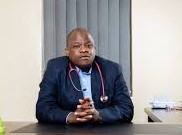
In an exclusive interview with The Midweek WatchDr. Kudzai Masinire, who is ZIMA president suggests that the government has to come up with a “Single Health Pot” by consolidating all health-related levies.
The end of donor reliance
“Globally, the donor funding that has been assisting many countries in the Southern Hemisphere is being cut through executive orders. That funding will no longer be coming through,” stated Dr. Masinire.
He stressed that a health system reliant on “fragmented funding for donor-driven systems will not be resilient enough to carry us forward.”
”We need to appreciate that sustainable financing is the one that anchors health sector sustainability,” said Dr. Masinire. “It is not really up to us, but most Sub-Saharan countries will be affected, and most countries have increased their health budgets. Therefore, as Zimbabwe we need a domestically anchored financing model.”
A call for quantifiable healthcare rights
ZIMA’s key recommendation is for the Ministry of Health to move beyond mere policy by defining and legally committing to an Essential Minimum Health Service Package (EMHSP).
”The Ministry of Health needs to make a budget they can afford and release those funds to cater for the health sector,” Dr. Masinire asserted. This package must ensure a minimum service delivery standard across all levels of care which includes, primary, secondary, tertiary, and quaternary.
Crucially, the association wants the government to commit to quantifiable annual targets, transforming healthcare from a mere aspiration into a legal right:
Primary Level: Fully fund immunization and nutritional programmes.
Secondary Level: Guarantee funds for critical procedures like transfusions and Caesarean Sections.
Tertiary Level: Commit to a specific number of high-cost services like dialysis sessions.
”The government should be able to give us a number of dialysis sessions to fund for a full year… for example, 30,000 dialysis sessions or 400,000 Caesarean Sections,” Dr. Masinire explained. “Once they have committed that, we can be able to calculate what is required and that is what we want funds to be mobilised for.”
He added “Once everything is costed and it’s there in the constitution, anyone going to any level of healthcare service can demand for the service, for health is a right.”
Legislating the ‘Single Pot’ and transparency
To fund the EMHSP, ZIMA is proposing a radical restructuring of how health levies are managed, demanding an Act of Parliament to ensure transparency and dedicated use of funds.
The recommendation is to consolidate all existing health-related revenues including the AIDS Levy, Road Levy, Airtime Tax, and Sugar Tax into a single pot.
Dr. Masinire proposed: “We recommend that all the money from the AIDS levy, road levy, sugar tax all the health related taxes should be put in one big pot and create a transparent system of tracking them.”
This consolidated fund would be run by a new entity, possibly an expanded National Health Insurance (NHI) body, under a management board. This, he argued, would be more efficient and accountable.
”We need an Act of Parliament that supports that so that Ministry of Finance will no longer have the leverage of giving whatever they want towards health,” he insisted. The funds must be “directly used to fund healthcare” for procurement, patient care, and staff remuneration.
External funding as a ‘complement’
While pushing for domestic reform, ZIMA acknowledged the continued need for global partners, but insists their role must change.
”We still want support from the global partners so in terms of external funding we still recommend that it should come to complement,” Dr. Masinire said. “We should identify first what we can do, and the global partners, development agencies should come to implement on what the government will not be able to do.”
The ball is now firmly in the court of the government and legislators to act swiftly to implement these reforms and secure the nation’s health future. ZIMA is pushing for these critical conversations to commence immediately. While the financing challenges facing the health sector remain acute, some experts point to previously tried models as a viable path forward. Dr. Obadiah Moyo, the former Minister of Health and Child Care, offered a specific example of success during his tenure.
’When I was still in the ministry, we did a pilot project at Chitungwiza Hospital where we implemented the Public-Private Partnership (PPP) model, and it worked quite very well,’ Dr. Moyo stated.
This successful pilot, where private sector efficiency and investment were leveraged alongside public service delivery, provides concrete evidence that locally adapted PPP models can significantly improve health financing and service quality.”
