-as bull auctioned $40k
MARTIN MAWAYA
HARARE– Zimbabwe is turning to science to revamp its livestock sector, spotlighting genetics and technology at the 57th National Breed Sale held this week in Mt Hampden.
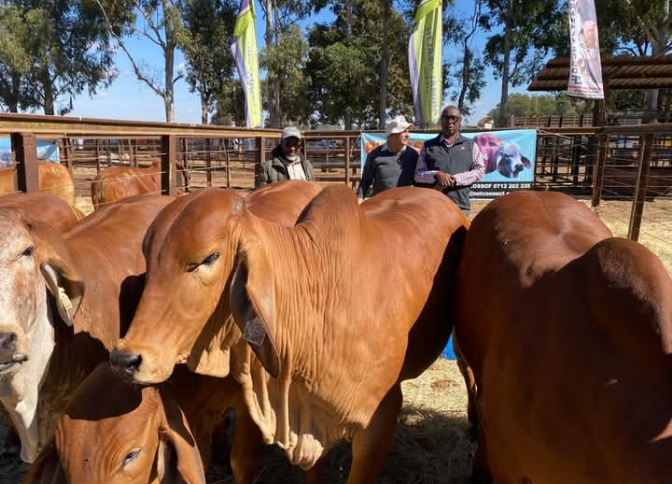
The event, hosted at Harare CC Sales in Mt Hampden, featured 140 pedigree animals including 60 bulls, 68 heifers, six rams, and six ewes from top breeds such as Beefmaster, Boran, Brahman, Nkone, Simbra, Simmental, Tuli, and Dorper sheep.
Officials say the auction marks a strategic shift from traditional livestock trading to a data-driven approach aimed at improving productivity and resilience in the face of climate change.
“This is not just about buying and selling. It’s about investing in food security, community resilience and national development,” Deputy Agriculture Minister Davis Marapira said during the auction. “We are building a resilient herd and a future-proof sector.”
A locally bred Brahman bull fetched US$40,000 at the sale, underscoring rising interest in high-performance genetics.
The Zimbabwe Herd Book, the national study registry, has recently adopted BREEDPLAN, a global livestock genetic evaluation tool allowing breeders to select animals based on traits such as fertility, feed efficiency, and disease tolerance.
Despite the advances, nearly 90% of cattle marketed in Zimbabwe still come from communal and smallholder farmers.
Marapira added that inclusion is key.
“We are expanding access to quality genetics to uplift the entire sector,” Marapira said, adding that public-private partnerships with abattoirs, livestock associations, and producers’ unions would be central to that effort.
Zimbabwe has set an ambitious target to grow its national herd from 5.7million to 12 million animals over the next 10 years.
The country currently has 220 registered breeders, covering 17 cattle and sheep breeds with over 24,000 recorded animals.
However, the sector continues to grapple with challenges such as stock theft, recurrent droughts, and outbreaks of Theileriosis and Foot and Mouth Disease (FMD).
The government says it is intensifying disease surveillance and stepping up drought mitigation efforts in coordination with the Zimbabwe Beef Producers Society (ZBPS), the Livestock and Meat Advisory Council (LMAC), and farmers’ unions.
