By Morgen Makombo Sikwila
The African Union (AU) seems to be in the habit of assigning deadlines for overly ambitious goals and then struggling to meet them.
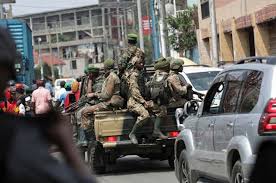
This has been the case with initiatives such as the adoption of an African passport by 2018 and the self-financing of the AU through an import levy by 2017. Another one of these is ‘Silencing the Guns by 2020’ – a flagship project of the AU’s Agenda 2063.
Clearly, 2020 has come and gone without Africa having reached the goal of being conflict-free. Therefore the deadline was extended to 2030.
Cynics are already predicting that this won’t be met, given the trend of insecurity the continent faces. This includes the spread of terrorism and violent extremism, a resurgence in coup d’états, resource-linked instability and conflicts in areas like the Great Lakes Region, and intra-state conflicts such as in South Sudan, Libya, Ethiopia and Cameroon.
Tackling the multiple root causes of Africa’s many conflicts by 2030 against poor leadership and its consequent global economic slow-down will be difficult, if not impossible. The AU also remains limited by the sovereignty of its member states. It can do only so much to nudge its members in the right direction – but ultimately its hands are tied. This won’t change by 2030.
The AU seems to be in the habit of assigning deadlines for overly ambitious goals and then struggling to meet them. The Master Roadmap to Silencing the Guns, adopted in Lusaka in 2016, lacked clarity and a workable implementation matrix with clear indicators of what success would mean. As part of efforts towards enhanced achievements, a monitoring and evaluation (M&E) framework was adopted by the AU Assembly and the development of an implementation plan to guide the contribution of key actors is under way.
Predictably, the current process of fine-tuning the M&E framework and working towards its implementation is challenging. A couple of years have passed since the goalposts were shifted to 2030.
The aims of Silencing the Guns are also extremely broad. They encompass almost everything the AU does or is supposed to. The new M&E framework divides the issues to be addressed by the Silencing the Guns roadmap under the broad frameworks of political, economic, legal and social issues.
Certain objectives such as strengthening financing for African peace support operations, setting up military interventions under the African Standby Force (ASF) or preventing the circulation of illicit arms flows in Africa can be relatively easily attached to a list of indicators of success. Success can be measured by, for example, looking at the available funds in the Peace Fund, the number of ASF deployments, cooperation between security agencies and ratifying and enforcing treaties dedicated to rooting out illicit arms trafficking.
Some goals, such as the success of African mediation strategies and peacekeeping, however, are harder to measure. Success in making peace is always more difficult to measure than failure. Africans want a more peaceful and prosperous continent by the 2030, short of any explanations
Other issues also demand much greater political will and are linked to issues of sovereignty that a framework from the AU will do little to change. For example, the AU plans to keep member states to their commitments under the African Charter on Democracy, Elections and Governance. This aims to ensure free and fair elections and prevent heads of state from unilaterally rewriting their own constitutions to stay in power. This is difficult to do for an inter-governmental organisation with no legal hold over its member states.
Yet, without putting the bar too low, for member states to merely ratify their own decisions over the years will be an important first step – and the M&E framework can measure this. Enforcing sanctions against those who don’t comply with AU instruments would be another necessary step – and is also noted in the M&E framework.
The economic and social progress to be made on the continent to Silence the Guns by 2030 are broader and more difficult to measure. However, tracking and recovering illicit financial flows from Africa, harmonising legislation and building the capacity of states’ financial intelligence services, enhancing compliance with labour laws, and enforcing compliance with regulations regarding the extractive industry should be possible.
Promoting industrialisation on the continent and creating decent jobs are, meanwhile, harder to measure and achieve. The same goes for social aspects of the roadmap.
It’s crucial to popularise the Silencing the Guns agenda afresh and ensure buy-in from member states. The danger of relying too much on frameworks, documents and committees is that ordinary citizens will expect to see concrete results. Africans want to see a more peaceful and prosperous continent by the end of 2030, short of any explanations. This is clearly beyond the scope of what the AU and its organs and institutions can deliver if a new way of managing peace and security isn’t adopted.
For this to happen and for citizens to keep track, it’s crucial to popularise the Silencing the Guns agenda afresh and ensure buy-in from member states. This can be achieved by involving the African Peer Review Mechanism that has focal points in most countries, the AU’s Economic, Social and Cultural Council, the private sector, civil society organisations and the media.
The overall aim of Agenda 2063 is a ‘conflict-free, integrated and prosperous Africa.’ Strides are being made with all three of these, albeit not fast enough. The African Continental Free Trade Area agreement was adopted with much fanfare in 2018 and a secretariat set up in Accra. Still, final negotiations around key issues are ongoing and trading hasn’t begun.
Its fast adoption by states benefited from heavyweight states’ strong leadership, and financial support from partners, to take it forward. Silencing the Guns should benefit from this same momentum, institutional framework and urgency. The “silencing the guns” initiative, a key goal of the African Union’s Agenda 2063, faces significant challenges, making it highly unlikely to achieve its goal of ending all wars and violent conflicts by 2030. These challenges include persistent conflicts, climate change, terrorism, coups, and the continent’s history, along with the need for better coordination and commitment from member states.
Despite the AU’s efforts, conflicts persist in various regions of Africa, fueled by ethnic tensions, political instability, and resource scarcity. Addressing the root causes of conflict, such as poverty, inequality, and lack of good governance, is crucial but requires long-term, sustained efforts that may not be achievable by 2030.
Climate change exacerbates existing conflicts by increasing competition for resources like water and land, further destabilizing regions. The rise of terrorist groups in certain regions poses a significant threat to peace and security, making it harder to achieve a continent-wide “silencing the guns” by 2030.
Military coups and political instability undermine democratic processes and can lead to further violence and instability. There is also lack of coordination among actors involved in conflict prevention and peacebuilding efforts hindering progress. The AU’s ability to enforce its initiatives is limited by the sovereignty of its member states, which may not always prioritize peace and security.
The AU’s success depends on the financial commitment of its member states, but many countries are in arrears on their contributions. Even when political will exists, it needs to be reinforced with financial and practical support.
Securing and sustaining peace requires more inclusive and participatory local and community-based platforms for dialogue and engagement. Poor leadership and the resulting global economic slowdown have exacerbated existing challenges in Africa, making it harder to achieve peace and stability. Africa’s increasing importance in the international system has led to a scramble for power and resources by global superpowers, which can further destabilize the continent.
Africa is faced with multiple challenges that put at risk the attainment of the noble objectives of silencing the guns even by the new timeline of 2030. Africans want peace in the continent. To have a continent in peace, it is necessary that African leaders believe that a continent with silenced guns is possible. The leaders of our nations have an added responsibility because they have the obligation to mobilize all sensitivities and secure the requisite means and resources at their disposal to fast track the silencing the guns once and for all.
Morgen Makombo Sikwila
MSc in Peace and Governance
BSc Counselling
Diploma in Environmental Health
Certificate in Marketing Management
email address: morgensikwilam@gmail.com
Phone Number: 0772823282

