Rutendo Chirume
MASVINGO-Vice President Kembo Mohadi has called for greater recognition of men in gender-based violence (GBV) advocacy, saying awareness campaigns and data collection should not overlook male survivors.
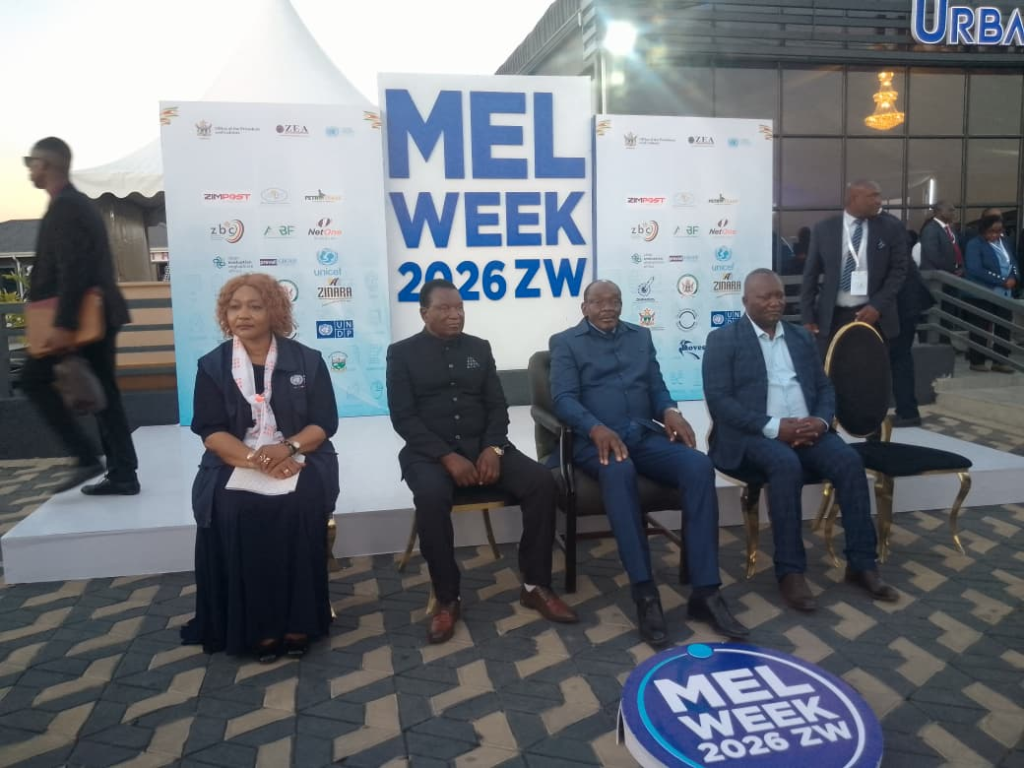
Mohadi raised the concern while touring exhibition stands during the Monitoring, Evaluation and Learning (MEL) Week in Masvingo.
His remarks came after he saw a GBV poster at the Ministry of Women Affairs, Community, Small and Medium Enterprises Development stand depicting women, prompting him to question the wider representation of men in GBV advocacy material.
“Why are there only women on this poster, men are also facing GBV, and they should be included on these advocacy tools?”
“The advocacy sector should broaden its portrayal of survivors by including men in awareness materials and research tools,” he said
The Vice President went on to question whether research and data collection tools being used to measure GBV were sufficiently capturing the experiences of men, arguing that advocacy and monitoring systems should reflect the experiences of all victims.
An official from the Ministry of Women Affairs explained that the strong focus on women in GBV campaigns was informed by the high prevalence of violence against women, while acknowledging the importance of including men in awareness efforts.
“Women remain disproportionately affected by GBV, which explains the focus of many campaigns, but men should also be recognised and represented in GBV awareness initiatives,” she replied.
Speaking in an interview with The Midweek Watch, Masvingo Root of Development Organisation (MaRODO) director Acknowledge Mawere said the emphasis on women in GBV interventions had contributed to a gap in the recognition and support of male survivors.
“A lot has been done on women, which has left a gap when it comes to men. It can even feel embarrassing for a man to report that he is being abused because of the stigma involved, and some may fear that they will not be taken seriously,” Mawere said.
However despite the observation women and girls remain disproportionately affected by GBV in Zimbabwe as represented by statistics.
The 2023-24 Zimbabwe Demographic and Health Survey found that 27 percent of women aged 15 to 49 had experienced physical violence since the age of 15, while nine percent had experienced sexual violence at least once.
Police statistics presented during the 2023 16 Days of Activism Against Gender-Based Violence campaign showed that between January and October that year, 16 444 women reported domestic violence cases involving men, compared with 2 463 men who reported cases involving women.
The statistics highlight the disproportionate burden of GBV on women while also pointing to the need for advocacy, reporting and support systems that do not leave male survivors behind.
Mohadi’s intervention has consequently brought the representation of men into focus, particularly the need for GBV monitoring and advocacy programmes to recognise the experiences of both women and men.