Tendai Muererwa
BUHERA – The official launch of the 2026/27 Pfumvudza/Intwasa and Summer Inputs Distribution Programme on Monday 26 October 2026 marked a clear pivot toward social inclusion and resource utilization in Buhera District.
Gathered at Matsveru Village in Ward Six, community members, local authorities, and government leaders focused on a critical priority: transforming small-scale agriculture from a survival strategy into an inclusive engine for local economic growth.
Speaking at the event, the Minister of State for Manicaland Provincial Affairs and Devolution, Advocate Misheck Mugadza, stressed that long term food security relies heavily on empowering historically marginalized groups. He called for the intentional integration of youth, women, and persons with disabilities into agribusiness, noting that household resilience improves when every segment of the community can actively participate in crop production.
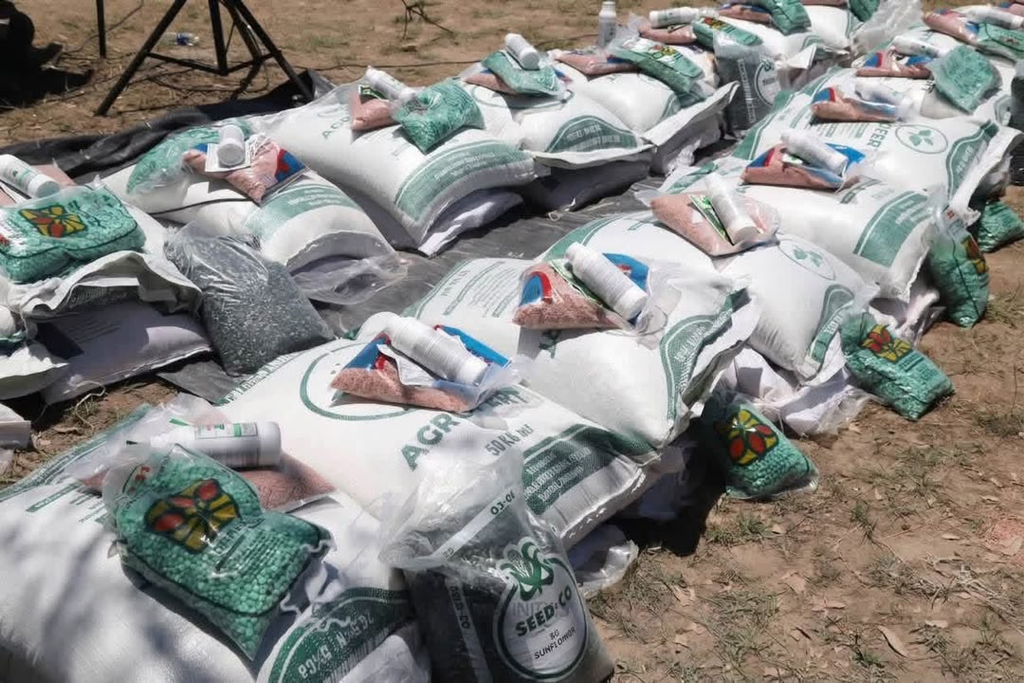
Minister Mugadza underscored that the initiative aims not only to meet basic dietary needs, but also to yield marketable surpluses that generate steady household income across the province.
To achieve this, the Minister pointed to Manicaland’s underutilized natural assets, arguing that local dams and irrigation capacity must be fully harnessed to buffer farmers against increasingly unpredictable weather patterns. Urging farmers to adopt early maturing, drought tolerant crop varieties and adhere strictly to moisture conserving Pfumvudza practices, he praised local growers for already preparing over 45,000 plots. He also commended traditional safety nets like the Zunde raMambo program as crucial pillars of social cohesion during tight agricultural cycles.
The event highlighted strong political and administrative alignment across district leadership, with Buhera West Constituency Member of Parliament honourable Tafadzwa Mugwadi, attending alongside traditional leaders, development partners and government representatives. Mugwadi’s presence underscored the shared legislative and community support for localized development in Buhera, signaling a united effort to transition smallholders into sustainable, commercialized producers under the framework of NDS2 and Vision 2030.



