“Torturers must never be allowed to get away with their crimes, and systems that enable torture should be dismantled or transformed.” – UN Secretary-General António Guterres
Around the world, the 26th June is observed as the International Day in Support of Victims of Torture.
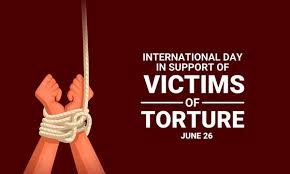
Torture can be defined as any act by which severe pain or suffering, physical or mental, is unlawfully inflicted on a person by or with the consent of an official or someone acting in an official capacity. It is a grave violation of human dignity and a direct assault on the rule of law.
The Convention Against Torture
The 26th June marks the moment in 1987 when the UN Convention Against Torture and Other Cruel, Inhuman or Degrading Treatment or Punishment [CAT] [link] came into effect. The Convention serves as a reminder of our shared global responsibility to end all forms of torture, uphold human dignity and ensure justice and support for survivors.
Today, there are 174 State parties to the Convention. Zimbabwe is not one of them.
Zimbabwe, as a member of the international community, has a duty to ensure that no citizen is subjected to torture. We call upon His Excellency the President to urgently ratify the Convention. Ratification would signal Zimbabwe’s commitment to ending impunity, strengthening accountability, and protecting the rights of all citizens. It would also align our nation with global standards of justice and human rights.
The Survivors Charter
Equally vital is the adoption of the Charter of Rights of Victims and Survivors of Torture and Other Cruel, Inhuman or Degrading Treatment or Punishment [the Survivors Charter] [link], which places survivors at the centre of policy and practice. This Charter affirms the right to rehabilitation, justice, and reparation, ensuring that victims are not silenced but empowered to rebuild their lives. Zimbabwe must embrace this framework to restore trust in institutions and to heal communities scarred by violence.
Torture in Zimbabwe
Recent months have seen disturbing cases of torture and ill‑treatment in Zimbabwe.
· Professor Lovemore Madhuku, Effort Manono, and other activists from his NCA party gathered on the 1st March 2026 for a consultative meeting when they were violently beaten with batons in the presence of uniformed police officers.
· Another lawyer, Douglas Coltart, was assaulted at a consultative meeting convened by Parliament to discuss proposed Constitutional amendments. Police officers were present at the meeting.
· Opposition activists such as Godfrey Karembera (Madzibaba Veshanduko), Lazarus Chacha and many other ordinary citizens have reported brutal beatings, abductions, and intimidation during public hearings and civic gatherings.
No one has been arrested in relation to these cases.
These acts are not isolated – they represent a pattern that undermines democracy and the rule of law, and erodes the constitutional promise of freedom and dignity.
Veritas reiterates that torture is never justified. It corrodes justice, silences dissent, and leaves lasting scars on individuals and society.
Steps to be Taken
On this day, we honour victims and survivors of torture, and urge Zimbabwe to take decisive steps: ratify the Convention Against Torture, adopt the Survivors Charter, and investigate all allegations of torture with transparency and urgency.
Only by confronting the reality of torture can Zimbabwe move towards a future where the rule of law is respected, and every citizen is free from fear.


