By Sifiso Agbetorwoka
In the heart of rural Zimbabwe, goat farming has quietly sustained families for generations.
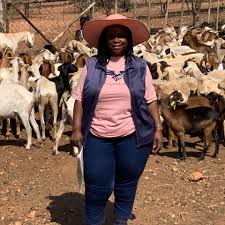
Goats, especially the resilient Matebele and Mashona breeds, have been more than livestock — they are a source of food security, income, and cultural pride.
Yet, for all their importance, indigenous goat production still faces significant challenges, particularly among smallholder farmers who make up the majority of producers.
What is often overlooked is the role of networking — the simple act of farmers talking to one another, sharing ideas, and building relationships. Networking has long been recognized as a key to professional success in many sectors, and in indigenous goat farming, it may well be the missing ingredient to unlocking growth and sustainability.
Take, for example, the problem of inbreeding. Across the country, many smallholder farmers breed goats within their own herds, often using the same bucks season after season. The result is weaker offspring, reduced productivity, and higher vulnerability to disease. Yet, when farmers connect with others in their community or across districts, the solution becomes clear: exchanging bucks can diversify bloodlines, strengthen herds, and preserve the integrity of indigenous breeds. Networking transforms a private challenge into a shared solution.
The same is true for knowledge gaps. A farmer in Tsholotsho might have mastered low-cost fencing using locally available materials, while another in Gokwe may have developed effective feeding practices during drought. On their own, these farmers operate in silos. But when brought together, they can exchange skills that benefit everyone. This is the very essence of networking — a collective pool of experience that no single farmer could access alone.
Beyond skills and genetics, networking also opens pathways to markets. Many smallholders sell their goats informally, often at low prices dictated by middlemen. By joining forces through cooperatives or producer groups, farmers can access structured markets, negotiate better deals, and even reach larger buyers such as abattoirs or institutional markets. Networking creates visibility and bargaining power that individual farmers rarely enjoy.
Mentorship is another dimension of networking that is proving vital. Goat farming, like any enterprise, requires both passion and knowledge. Seasoned farmers who have weathered years of droughts, disease outbreaks, and market shifts carry lessons worth passing on. Younger farmers, on the other hand, bring new energy and openness to modern tools such as digital marketing and online auction platforms. When the old and young connect, they create an intergenerational bridge that ensures indigenous goat farming not only survives but thrives.
It is against this backdrop that the Goat Breeders Association of Zimbabwe (GBAZ) is hosting the Annual Goat Indaba & Training Courses 2025. Set for 24 October at Grand Palm Lodge in Bulawayo, the Indaba is designed as more than just a conference. It is a gathering of minds, a marketplace of ideas, and above all, a networking hub for everyone committed to indigenous goat farming.
The programme reflects this emphasis. Farmers will take part in technical and practical training sessions, where they can learn directly from experts and from each other. Panel discussions and policy dialogues will give producers a voice in shaping the future of the sector. A breed showcase of Matebele and Mashona goats will highlight the unique traits of Zimbabwe’s indigenous breeds, while a market and auction platform will connect farmers directly with buyers.
For the youth, the Catch Them Young mentorship initiative will ensure that skills, knowledge, and enthusiasm are passed on to the next generation. And perhaps most importantly, the event will offer ample opportunities for networking, where farmers can strike up conversations that may turn into lifelong partnerships.
The future of indigenous goat farming will be anchored in how well farmers connect, collaborate, and share with each other. Networking is not just an optional extra — it is the foundation upon which we will preserve our indigenous breeds and build thriving enterprises.
Indeed, the Indaba underscores a simple but powerful truth: farming is no longer just about tending animals in isolation. It is about joining hands, learning from peers, and building communities of practice that make the whole sector stronger.
For Zimbabwe’s indigenous goat farmers, the Goat Indaba 2025 represents an open door. It is a chance to step out of the silo and into a network that promises not only improved productivity but also resilience, sustainability, and shared prosperity.
As the sun sets on the old ways of farming alone, a new dawn is rising — one where farmers stand together, united by the common goal of preserving their goats, protecting their livelihoods, and building a future anchored in the power of networking. Networking is not just a useful practice — it is a lifeline that can determine the difference between struggling in isolation and thriving within a supportive ecosystem.
NB: Sifiso Agbetorwoka is the Chairperson if the Goat Breeders Association of Zimbabwe and writes in her own capacity. You can contact her on 0775 369 910 E: bulembefarm @gmail.com. Facebook- Bulembe Farm. YouTube – Bulembe Farm
Instagram – Bulembe Farm. Tik Tok Bulembe Farm.
Farmers and stakeholders interested in attending the Annual Goat Indaba & Training Courses 2025 can register now. The event will take place on 23-26 October at Grand Palm Lodge in Bulawayo from 9AM to 5PM. Tickets are available at $40 for non-members and $30 for GBAZ members if purchased in September. For bookings and more information, contact 0774 122 660 or 0771 967 856.
