Martin Muleya
MUTARE-The once iconic gateway city to the sea, nestled in the eastern highlands of Zimbabwe, is now struggling to maintain its infrastructure, mainly the road network which crumbling like a deck of cards.
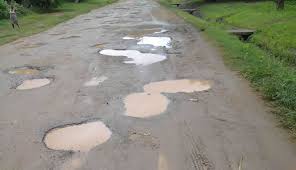
The city’s roads, in particular, have fallen into a serious state of disrepair, leaving both commuters and motorists deeply frustrated.
As one drives through the city’s road network, one cannot help but notice the plethora of potholes or drum holes that pockmark the roads. Some are small and shallow while others are deep and treacherous, capable of swallowing a car’s whole tyre. The roads are a maze of cracks and craters, making every journey a bone-jarring and teeth-rattling experience.
But potholes are just the beginning.
The city’s drainage system is also in a shambles. Clogged drainages and broken storm-water pipes have turned many roads into virtual rivers during this rainy season.
To make matters worse, the local authority’s rapid expansion has led to a proliferation of housing projects, many of which have been built without proper planning or infrastructure. Roads are often narrow and poorly maintained, with no sidewalks or streetlights to speak of. The lack of proper services has turned many of these projects into virtual slums.
Addressing residents and other stakeholders at Mutare Hall on Monday (24/2/25), City of Mutare Town Clerk Blessing Chafesuka highlighted that the city’s major weak points are roads and public lighting.
“The level of funding required for us to bring our roads to the proper state against the funding available currently does not match. Our roads are in a serious state of disrepair, clogged drainages, potholes and made worse by a number of housing projects sprouting all over which are not properly serviced.
“As a result there has been serious outcry from residents in relation to the state of our roads. We have a total of 507km road network with 293km being tarred with earth roads comprising of 214km. the majority of our roads network is about 95% in backlog of maintenance.
“We have a stretch of 350km that needs complete reconstruction. From the engineer’s estimates council requires US$108 million to service the roads. We are having three major sources of revenue to maintain our roads but still the money we are getting is very little as we realize US$1.2 million a year to attend to roads. This US$1.2 million at best can do 1.5km depending with the size of the road and the extent of the damage that requires rehabilitation. Our engineer is saying on average we are destroying 25 km per year which require reconstruction. So while we are destroying 25km we are only managing to stretch to 1.5km only,” said Chafesuka.
While the Town Clerk has promised to address the issues, progress has been slow. Residents are growing increasingly frustrated with the lack of action, and many are calling for more urgent attention to be paid to the city’s crumbling infrastructure.
As the gate way to the sea struggles to cope with its crumbling infrastructure, one thing is sure, something needs to be done and fast.

