MARTIN MAWAYA
N’DJAMENA, CHAD-Pan-African Parliament (PAP) President Chief Fortune Charumbira has urged world leaders and legislators to redefine peace and tolerance in the digital age, warning that social media toxicity, artificial intelligence (AI) abuse and climate injustices are fast emerging as the biggest threats to global stability.
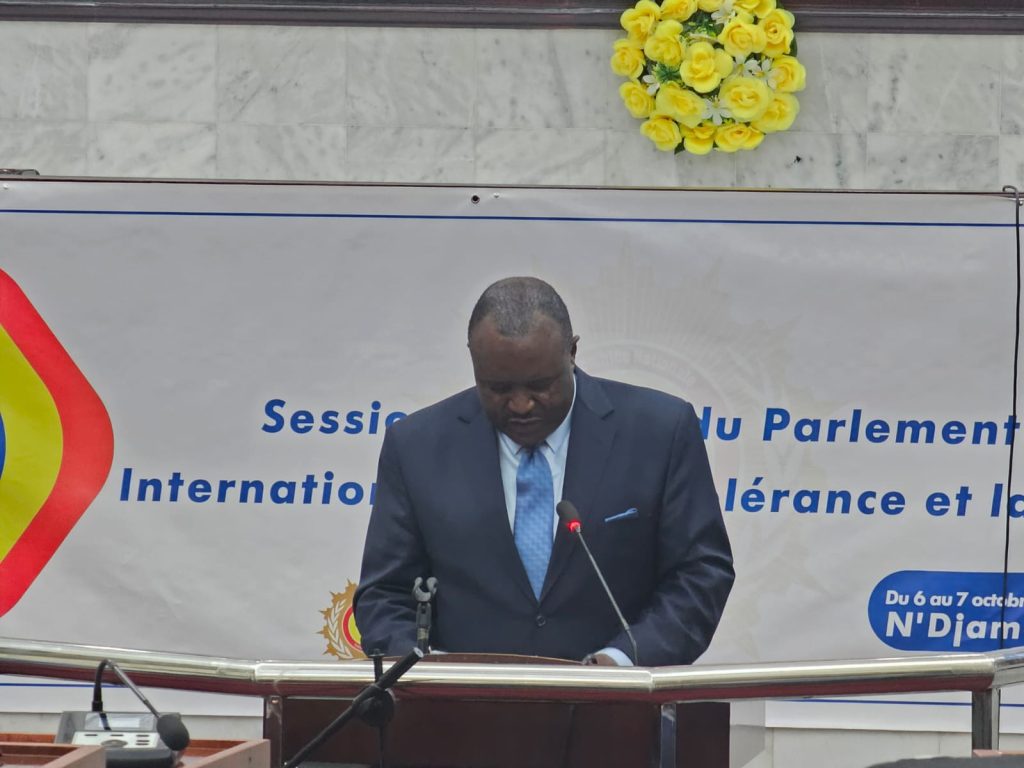
Speaking at the 13th Plenary Session of the International Parliament for Tolerance and Peace in N’Djamena, Chad, Charumbira said parliaments must urgently legislate to curb “digital intolerance”, a modern form of hate and extremism that is dividing societies and undermining democracy.
“In the age of social media and artificial intelligence, online hate speech threatens social cohesion,” he said. “Parliaments must legislate to promote tolerance and ensure ethical governance of the digital sphere.
Charumbira revealed that the Pan-African Parliament was developing a model law on AI governance and cybersecurity, describing the initiative as a major step towards protecting African societies from digital exploitation and manipulation.
In a departure from traditional peace rhetoric, Charumbira said the global peace agenda must now shift from controlling guns to regulating algorithms, warning that unchecked online hostility and misinformation were becoming invisible drivers of division and political instability.
“Tolerance must evolve with our times,” he said. “We must recognise that digital violence and hate speech are as destructive as physical wars.”
He also linked environmental protection to peace, arguing that climate change driven hunger, migration and droughts were becoming new causes of conflict in Africa.
The former Zimbabwe Chiefs Council President urged parliaments to pass laws that promote intergenerational fairness and climate responsibility, describing environmental tolerance as a key pillar of sustainable peace.
He added that the Pan-African Parliament was positioning itself as a major actor in parliamentary diplomacy, pushing for conflict prevention through dialogue and collaboration rather than confrontation.
“No country or continent can bear the burden of world peace alone,” he said. “Peace must be a shared responsibility built through cooperation.”
The PAP President commended Chad for hosting the meeting and for steering its political transition through dialogue, saying the country had demonstrated that tolerance and forgiveness were more powerful than violence.
“By hosting this meeting, Chad sends a powerful message that dialogue is a stronger weapon than war,” he said.
The Chief has also called on legislators to turn tolerance from mere rhetoric into concrete policies and legal frameworks that protect human dignity.
“Tolerance is not weakness; it is strength. Peace is not utopia; it is the foundation of our future,” he said.
The N’Djamena session, attended by lawmakers from over 40 countries, reaffirmed Africa’s growing voice in shaping global peace debates focusing on digital ethics, environmental justice and inclusive governance as the new foundations of a tolerant world.
