Tendai Muererwa
HARARE – One of the country’s largest pentecostal churches, the Apostolic Faith Mission (AFM) of Zimbabwe, is facing a defining moment as a High Court challenge threatens to reshape its leadership and test the unity of the denomination.
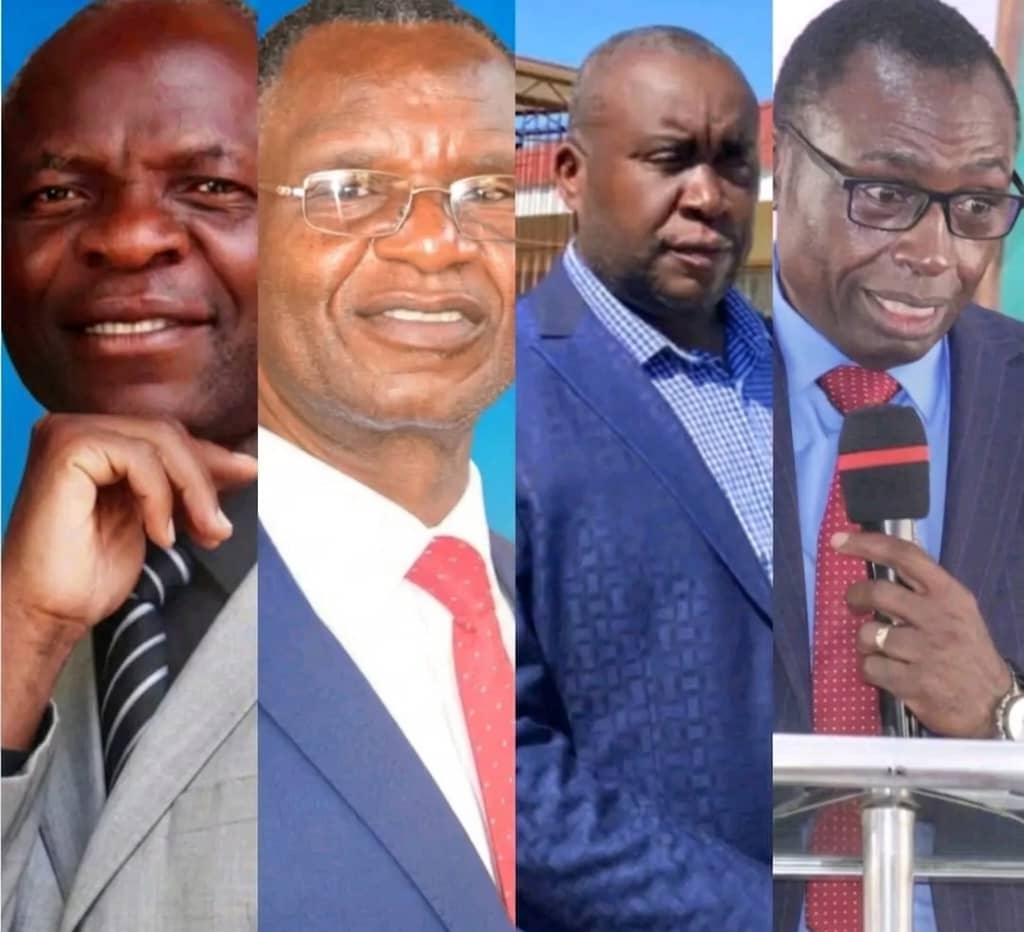
The court challenge, brought by church members Daniel Mhlanga and Dennis Maposa, seeks to overturn the election of AFM president Dr Cossam Chiangwa, deputy president Reverend Amon Chinyemba, secretary general Dr Nathan Nhira and National Administrator Shepherd Sebata, arguing that the process violated constitutional age-limit provisions.
The case was filed on 26 May 2026 at the high court in Harare, under case number HCH2288/26.
The application implores the High Court to nullify the May 2025 election of the church’s presidium and order fresh elections within 90 days. At the centre of the dispute is a constitutional provision that allegedly limits eligibility for presidium positions to candidates aged 65 years and below. The applicants argue that church leaders unlawfully altered this requirement ahead of the election, paving the way for candidates who would otherwise have been ineligible to contest.
According to court papers, the controversy stems from meetings of the Apostolic Council held in February 2025, where a proposal was tabled to increase the maximum qualifying age for presidential candidates from 65 to 70 years. The proposal was reportedly justified by changes to Zimbabwe’s public service retirement framework.
However, Mhlanga and Maposa contend that the Apostolic Council lacked the authority to make such a change without following the constitutional amendment procedures prescribed by the church’s governing document. They argue that any amendment required prior notice and approval through a formal voting process, which they say did not occur.
The applicants are therefore seeking a declaration that the February 2025 resolution was unconstitutional and invalid. They want the original age limit of 65 years reinstated and all elections conducted under the disputed provisions set aside. They have also asked the court to nullify decisions and resolutions made by the contested leadership since assuming office in May 2025.
In previous related proceedings, church leaders have maintained that the Apostolic Council did not amend the constitution but merely exercised its authority to interpret provisions that required clarification. The applicants reject this argument, insisting that the constitutional wording is clear and leaves no room for interpretation.
President Chiangwa has confirmed the existence of the court proceedings but declined to comment on the merits of the case, citing the principle that matters before the courts should not be publicly debated while litigation remains pending.
The case has sparked intense debate within the church and beyond, raising questions about governance, constitutional compliance, accountability and leadership succession within the AFM.
Should the court rule in favour of the applicants, the church could be compelled to conduct fresh elections for its highest offices, potentially ushering in a new leadership structure. If the application is dismissed, the current leadership is likely to remain in office with judicial backing for its position.
Yet beyond the legal arguments lies a deeper challenge confronting the church: how to preserve unity amid a dispute that has now reached the courts. While some members view the litigation as a legitimate effort to defend constitutional principles and promote accountability, others believe internal disagreements should be resolved through church structures rather than secular courts.
The controversy has also renewed debate around biblical teachings that encourage believers to settle disputes among themselves, while others argue that courts remain necessary when constitutional and legal rights are at stake.
Whatever the outcome, observers say the judgment alone may not heal the divisions exposed by the dispute. Church history around the world has shown that legal victories do not always restore trust or mend fractured relationships. As AFM members await the court’s verdict, many are asking whether peace and unity will return once the legal battle is over.
The answer may depend less on the judgment itself and more on the willingness of all parties to place the future of the church above personal interests and factional loyalties.
For now, the AFM remains in a season of uncertainty, with a case that could shape not only its leadership but also its unity and direction for years to come.