Masvingo veteran ZRP medical practitioner, Dr Godfrey Zimbwa is set to retire on his birthday later this month as stipulated by uniformed forces regulations, that one retires on his or her birthday. He served the Army mainly during the DRC war and Police for more than 30 years.
Dr Zimbwa will retire from public medical practice on 28 February the day he turns 54 years and he leaves behind a wealth of good memories and experience that no doctor can get anywhere except from the country’s security service.
Below, our reporter Nyashadzaishe Rushwaya (NR) caught up with Dr Zimbwa (DZ) in a wide ranging interview on insights of his professional and personal life.
Below are experts of the interview.
NR : Who is Dr Zimbwa?
DZ: My full name is Godfrey Nyikadzino Zimbwa and I was born on the 28th of February 1969 at Chinyika rural hospital in Chitsa in Gutu. I grew up in a modest family of 6 children which constituted of four boys and 2 girls one my sisters is late, I am the 5th in the family.
My father who a Rhodesia Railways worker now National Railways of Zimbabwe (NRZ). He was part of the team the laid the railway line from Bulawayo to Chikwalakwala now known as Sango border post.
NR: Can you take us through your educational journey until you became a medical doctor
DZ: I started my educational journey in January 1977 at Machingambi Primary School where I did my primary education. I delayed starting school because of the death of my mother who passed on in November 1976 when I was only 7years old.
I completed grade seven in December 1983 having experienced a short break in my studies as a result of the liberation war in 1979.
In January 1984 I began my form 1 at Chindunduma High School in Shamva . It was one of the best boarding schools for war veterans, which also enrolled us though I wasn’t a liberation war hero.
The school classrooms were made of precast material and they were temporary structures with many classes for the different grades and it was quite a comfortable school at that time and the experience there was close to none compared to other schools back then.
I was one of the youngest students at 14 years and the oldest of them in my class was 36 years old and we related very well in class despite the difference in age.
In January 1986 I then moved to Harare Secondary School in Mbare, Harare, after completing my ZJC level now known as form two.
At Harare High I did form three to form six. At O Level I passed with flying colors as I obtained 7As and 1B which was quite historical back in the days.
As a result of my good grades at O Level I got scholarship for A Level from the Harare City Council for the best performing student learning in the high density suburbs which were known as the group B schools.
From there I performed well again in science subjects and I went to university in 1990 at the then Godfrey Huggins College of Medicine now known as the college of health studies at the University of Zimbabwe.
During the course of my studies I was then recruited into the Zimbabwe National Army, joining as a medical cadet and appointed to the rank of Warrant Officer Class One on 1 July 1992.
I qualified in 1994 and was posted to Mpilo Central Hospital and the United Bulawayo Central hospitals on 1 January 1995 for internship.
I successfully completed internship on the 31st of December 1996 and was subsequently posted to the HQ 4 Brigade as a medical officer at Four Field Ambulance Company and was appointed acting senior medical officer
I came to Masvingo in January 1997 after completing an internship at the two Bulawayo hospitals.
NR: Tell us your experiences as a medical doctor for the military to the point you left the army.
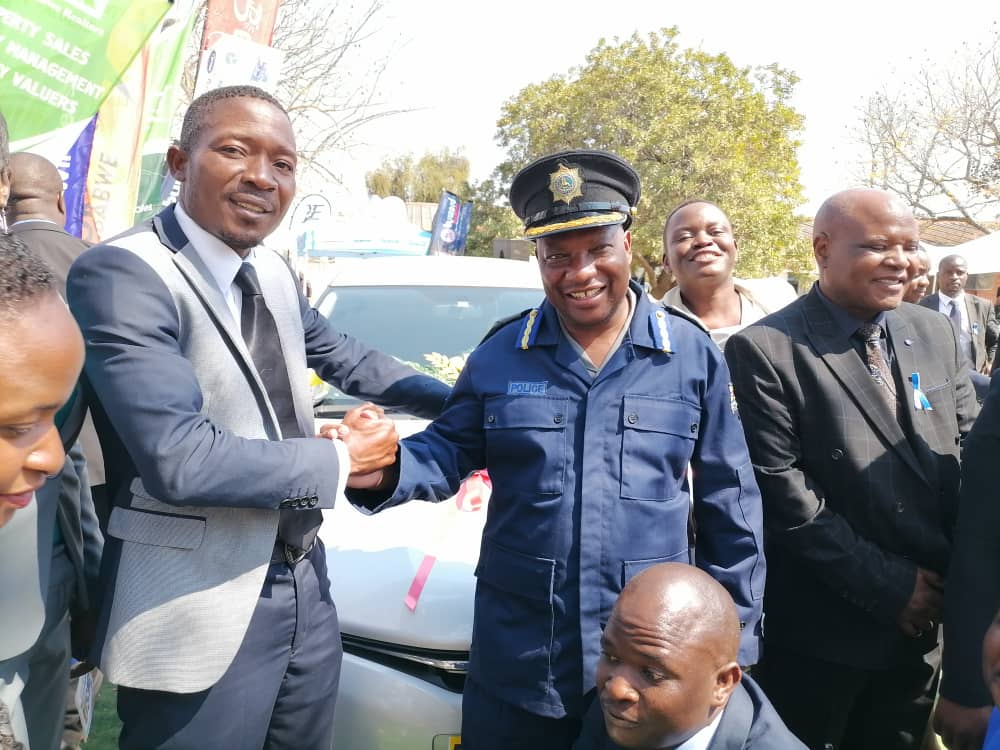
DZ: It was an intriguing experience being in the army from October 1997 to April 1998 when I underwent military training at the Zimbabwe Military Academy in Gweru for a basic officer’s course.
I was deployed to the Democratic Republic of Congo on several occasions from November 1998 up to February 2001 operating in a number of places such as Kinshasa for almost 4 months.
At Kinshasa we had to establish a military hospital at the N’Djili Airforce Base, though the site hospital had beautiful structures, but had nonfunctional equipment so we had to bring our own supplies for it to be functional.
I was deployed to Kamina briefly and stayed there for a month and moved again to Mbujimayi, and Kabinda working with different units of the ZNA.
Since it was a war period, sometimes we had to put up temporary field hospitals and protected underground hospitals for our safety and patients which was quite a unique experience.
My duties there were to attend to injured and sick soldiers as well as enemy soldiers captured and were treated under the Geneva Convention as per the rules of the war where captured enemy soldiers must be treated in a humane way.
My services also extended to civilians in the surrounding communities. DRC is a tropical region and it rains daily and malaria was the main disease affecting communities, but we always had enough supplies to cater for the communities around our operational areas.
I retired from the army in May 2001 with the rank of Captain and ventured into private practice for a while then temporarily moved to the United Kingdom where I wrote General Medical Licensing Examinations, but I left in a huff due to unfair employment opportunities.
NR: Upon your return to Zimbabwe what was your next move
DZ: I joined the ZRP in May 2007 and I was appointed to the rank of Assistant Commissioner and Provincial Medical Officer for Masvingo province.
My main duties were to treat all serving members of the police and their dependencies as well as pensioners.
I also attended communities in the vicinity of the camps.
One of my duties was to conduct medico legal duties and forensic work which involved examining of sexually assaulted victims, physical violence victims and performing post mortems on murder cases which inevitably took me to the High Court on many occasions as a state witness, duties I have been diligently carrying out.
NR: Why did you not go to the diaspora like what most doctors are doing as they look for greener pastures
DZ: My experience with diaspora in 2001 was not pleasing and from then on I decided not to leave my country.
I also felt that if I worked hard in Zimbabwe I would do much better than in the diaspora.
In the diaspora chances are almost nil for one to venture into private practice.
NR: Now that you will be retiring what are your plans
DZ: I will continue in private practice as part time but most of my time will now be devoted to farming. I have a farm and farming has always been my passion so, being on retirement means I can give full attention to my farming business.
NR: What do you recommend to be done differently in the force with bias towards health delivery.
DZ: We must look at the bigger picture, for the health service to improve the general economic outlook should also improve.
Health can never be an island of prosperity in a sea of poverty, we must prioritize health delivery especially in those areas where Zimbabwe is known to perform best and I quote my late colleague Dr Pazvakavambwa “when you are in trouble do what you know best”.
We should concentrate on public health initiatives, maternal and child health, immunizations, improving medical supplies, rehabilitating our medical facilities, and aggressively deploying specialists to provincial hospitals so as to reduce pressure on central government hospitals.
Empowering rural health staff which include nurses, environmental health technicians, village health workers and all other volunteering supporting grassroots staff that is the Zimbabwe that I wish to see.
All I want to see is a rich, healthy, stable and prosperous Zimbabwe.

