MARTIN MAWAYA
GWERU—Every school day began long before lessons for Rumbidza Zhou of Mberengwa.
Before sunrise, she would lift her son onto her back and carry him to school, knowing she would have to make the same journey when classes end.
The daily routine was physically exhausting, but she feared something worse, that her son would be denied education because of his disability.
“My son wanted to learn like every other child, but getting him to school was our biggest challenge,” Zhou recalled.
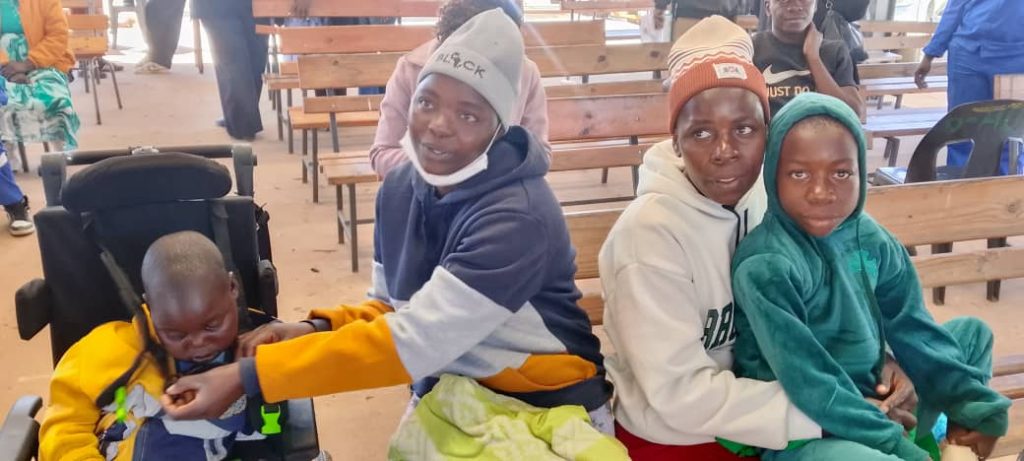
“Without a wheelchair, I had to carry him every day. It was painful and exhausting, and it made it difficult to care for my other children. Receiving this wheelchair has changed our lives. He can now go to school safely and with dignity.”
Her son, Grade Five pupil Precious Shumba of Makwava Primary School, is among dozens of learners in Midlands Province whose education is expected to improve after receiving assistive devices from the Ministry of Primary and Secondary Education.
For another parent, Privilege Mahambaedwa of Chachacha, Shurugwi, the donation means far more than improved mobility.
Her six-year-old son, Anopaishe Hove, who is epileptic and has mobility challenges, relied entirely on being carried from one place to another.
“Carrying him everywhere became increasingly difficult as he grew older,” she explained.
“It was painful for him and physically demanding for me. There were days when I struggled to complete household chores or earn an income because he needed constant support. This wheelchair gives him greater comfort and gives our family hope that he can attend school.”
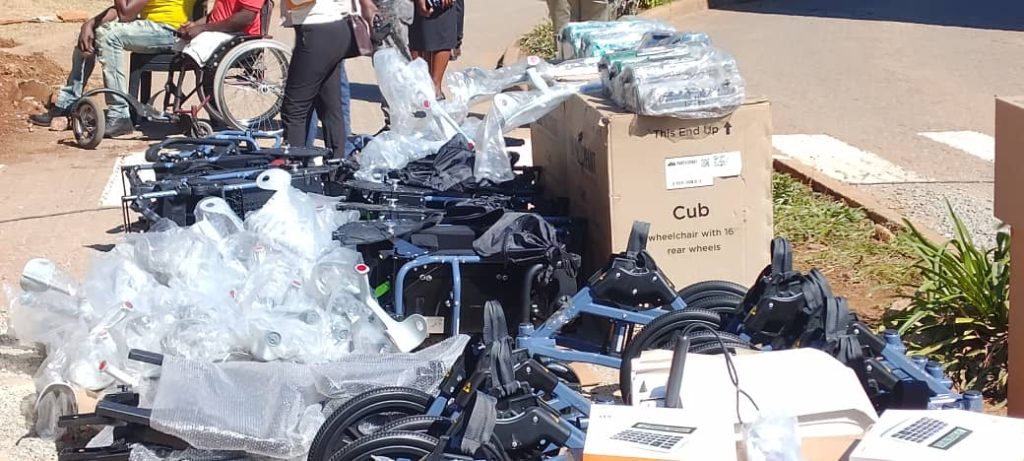
The Ministry of Primary and Secondary Education distributed 15 wheelchairs, 40 pairs of crutches, 32 magnifiers, 11 white canes, 125 talking calculators, 14 slates and styluses, 69 headphones, 21 Jensen recorders and 297 Braille abacuses to learners with disabilities across the province.
The devices are expected to improve access to learning for children with different disabilities.
Wheelchairs enhance mobility and reduce absenteeism by enabling learners to travel to school safely.
Talking calculators and Braille abacuses support mathematics for visually impaired learners, while magnifiers help those with low vision read classroom materials.
Headphones and audio recorders improve access to lessons for learners with visual or hearing impairments, allowing them to participate more independently in class.
National Council of Disabled Persons of Zimbabwe (NCDPZ) Chairperson Senator Anna Shiri said assistive technology not only improves academic performance but also boosts confidence, promotes independence and helps reduce the stigma many learners with disabilities face.
Speaking during the handover ceremony, Midlands Minister of State for Provincial Affairs and Devolution Owen Ncube stressed that inclusive education remained central to Zimbabwe’s development agenda.
“No child should be denied an education because of a disability,” said Ncube.
“These assistive devices are intended to ensure that learners with disabilities have the tools they need to participate fully in the education system and realize their potential.”
He added that the programme builds on Zimbabwe’s commitment to inclusive education following the adoption of the National Disability Policy in 2021 and the enactment of the Persons with Disabilities Act, which promotes equal access to education, public services and other opportunities.
Ncube noted that government was also investing in disability friendly infrastructure, including ramps, accessible ablution facilities and specialist resource units for learners with hearing, visual and intellectual disabilities.
Disability advocates, however, say assistive devices alone will not remove all barriers facing children with disabilities.
Many schools, particularly in rural areas, still lack accessible transport, specialist teachers, inclusive learning materials, sign language interpreters and adequate psychosocial support.
Many families also struggle to afford medical care, rehabilitation services and the repair or replacement of assistive devices.
Disability advocates say greater investment is needed to ensure every child with such a need completes school like any other able bodied pupil.
They called for disability friendly infrastructure in all schools, expanded early screening programmes, more specialist teachers and therapists, subsidised transport and sustainable funding for assistive devices and their maintenance.
They also urged stronger public awareness campaigns to combat discrimination and encourage parents to enrol children with disabilities at an early age.
For Zhou, the impact is already clear.
As her son wheeled himself away with his classmates, she watched with quiet relief.
For the first time in years, the journey to school no longer depends on the strength of his mother’s back, but on a wheelchair that has restored his independence, dignity and opportunity to learn.