FAITH NDOU
The Zimbabwe Schools Examinations Council (ZIMSEC) Amendment Bill has come under heavy criticism from disability rights advocates, educators and members of the public.
They say the Bill falls short of embracing the principles of inclusivity and access to education for all, as enshrined in the Constitution.
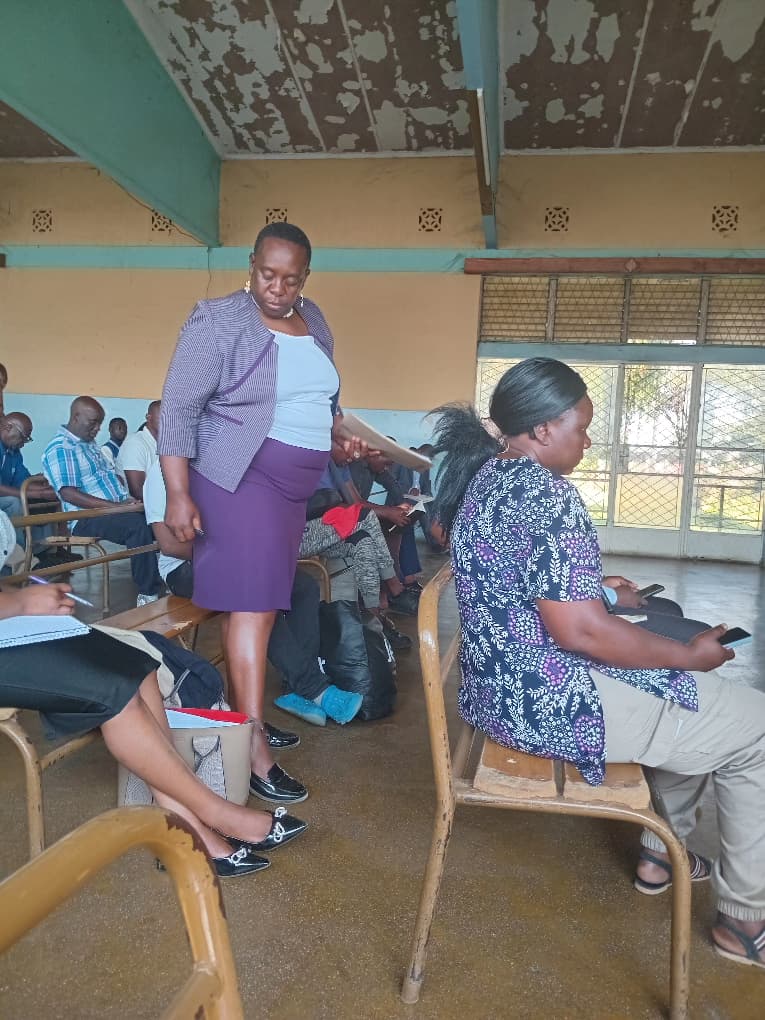
This was revealed during a public hearing held at Mucheke Hall in Masvingo on Wednesday, 27 August 2025, where members of the Parliamentary Portfolio Committee on Primary and Secondary Education gathered public input on the draft Bill.
A key concern raised during the engagement was that the ZIMSEC Amendment Bill is silent on provisions for disabled persons, in direct contrast with Section 22 and Section 75 of the 2013 Zimbabwe Constitution.

These sections mandate the State to take practical measures to ensure that disabled persons realize their full potential and that every citizen has the right to education.
The Director for the Disability Amalgamation Community Trust (DACT) for Masvingo Province, Henry Chivanga was among those who criticized the Bill’s lack of representation and consideration for disabled learners.
“ZIMSEC should have disabled persons represented on its board. Without inclusion at policy level, the challenges we face in the education sector will remain unresolved,” Chivanga said.
“There’s not even a definition of disability in the Bill and the pass rate is not categorized to reflect different learning capacities.”
He further pointed out that Article 24 of the United Nations Convention on the Rights of Persons with Disabilities (CRPD) to which Zimbabwe is a signatory, obliges States to ensure inclusive education systems at all levels and lifelong learning directed to the full development of human potential and sense of dignity.
The hearing drew diverse voices, including teachers, headmasters, ZIMSEC markers, directors from private colleges, members of parliament, community leaders and politicians.
While the ZIMSEC Amendment Bill intends to reform and strengthen the examination body, many argued that its current form fails to respond to grassroots realities and constitutional obligations.
Another strong issue raised during the session was the language of instruction used in the Heritage Based Curriculum.
One attendee questioned why Zimbabwe’s 16 official languages are not reflected in the examination system, which remains dominated by English.
“How do we say it is a heritage based curriculum if it is written in English? Our children should be examined in languages like Shona, Ndebele and others that reflect our cultural identity,” said one speaker from the audience.
Masvingo Rural District Councillor Sarah Munemo who is also the director of a private college, raised concerns about the cost disparity in examination fees between public and private institutions.
“Private college students pay double what public school candidates pay to sit for the same ZIMSEC examinations,” she argued.
Others criticized the failure of ZIMSEC to pay markers who are being paid less than a dollar per script.
With the Bill currently under review, the Portfolio Committee was urged to take note of the submissions from the Masvingo public hearing and to ensure the final legislation promotes an inclusive, accessible and fair education system.
The Portifolio Committee team was led by Masvingo South legislator, Tanatsiwa Mukomberi.
