STAFF WRITER
Harare -Communities in cyclone and drought-prone districts to benefit from blend of ancestral knowledge and modern early warning systems.
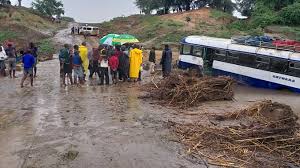
The International Organization for Migration (IOM), through funding from the IOM Development Fund (IOMDF), in partnership with the Government of Zimbabwe, will officially launch a two-year project to integrate Indigenous Knowledge Systems into national disaster preparedness.
“Strengthening Disaster Preparedness and Climate Resilience through the Integration of Indigenous Knowledge and Human Mobility into District-Level Planning in Zimbabwe” will be implemented in Chimanimani and Tsholotsho districts, in direct support of the Ministry of Local Government and Public Works through the Department of Civil Protection.
Zimbabwe continues to face escalating climate-induced hazards, including droughts, floods, and cyclones, which threaten lives and livelihoods. Chimanimani was devastated by Cyclone Idai in 2019, while Tsholotsho regularly experiences severe droughts. While the country has made progress in disaster management, a critical gap remains. Traditional early warning methods, such as observing animal behavior, plant cycles, and weather patterns passed down through generations, are not formally integrated into district-level disaster risk reduction (DRR) planning.
The project will document indigenous climate prediction and disaster preparedness practices from traditional leaders and community elders in both districts, then train these traditional leaders as community disaster focal points, creating a bridge between ancestral knowledge and formal emergency response systems. It will develop culturally appropriate, bilingual (Shona/Ndebele) early warning protocols that combine satellite data with indigenous forecasting methods and integrate findings into district disaster preparedness plans that can be scaled nationally. The initiative will also address human mobility patterns during disasters, ensuring displaced populations are factored into response planning.
The inception meeting scheduled for 14 November 2025 in Harare will bring together government ministries, local authorities, traditional leaders, development partners, and technical agencies to officially launch the project. Participants will agree on the roadmap for implementation, including baseline assessments beginning in February, and outline immediate next steps for field activities.
Diana Cartier, IOM Zimbabwe Chief of Mission, emphasized the practical value of combining knowledge systems: “Our role is to ensure that the grandmother who can predict drought by observing animal migratory patterns has the same seat at the planning table as the meteorologist with satellite data. Through the IOM Development Fund, we’re working directly with the Department of Civil Protection to turn centuries of survival knowledge into actionable disaster preparedness. This is not about nostalgia; it is about saving lives by using every tool available, especially those that communities already trust.”
Speaking ahead of the event, Nathan Nkomo, Chief Director of the Department of Civil Protection, emphasized the importance of collaboration and innovation in disaster risk reduction: “We are grateful to IOM for its steadfast support in strengthening Zimbabwe’s disaster preparedness and resilience. By integrating Indigenous Knowledge Systems and human mobility into district-level planning, this initiative advances our collective commitment to leave no one and no place behind in building inclusive and adaptive disaster risk reduction, as we enter the final lap towards achieving Vision 2030.”
The project aligns with Zimbabwe’s National Development Strategy 1 (NDS1), the National Climate Change Response Strategy, and international frameworks including the Sendai Framework for Disaster Risk Reduction and the Paris Agreement.

