By Morgen Makombo Sikwila
Women serving in the military face a set of unique challenges that include physical demands, cultural biases, limited combat roles and issues related to work-life balance.
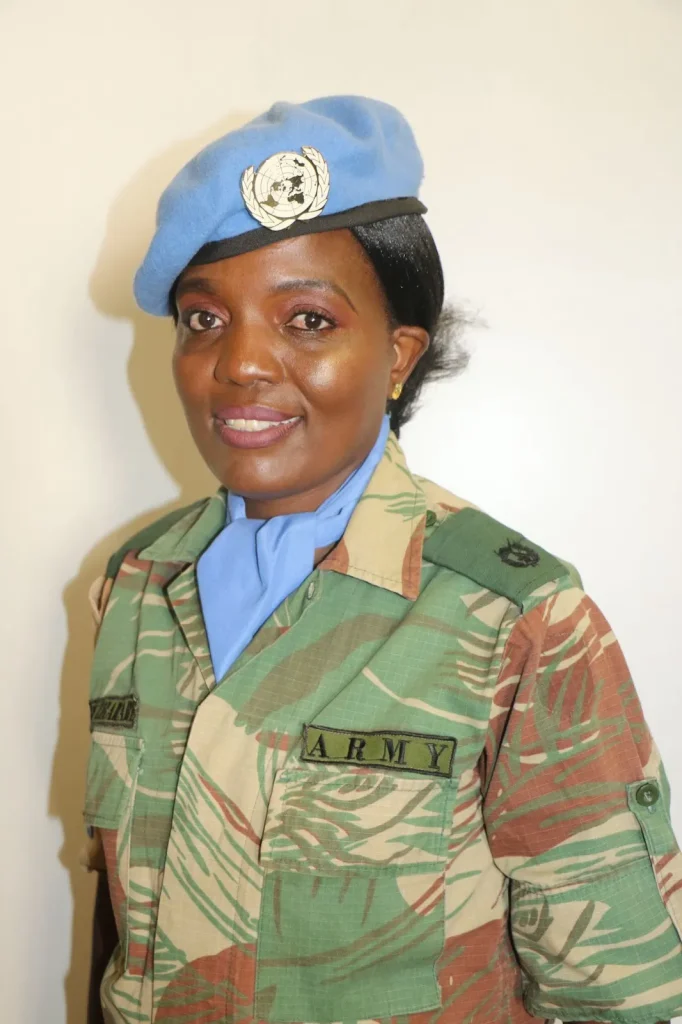
Historically, societal norms often relegated women to supporting roles, and while progress has been made, persistent gender biases continue to affect their experiences. Addressing these challenges is crucial for promoting gender equality and enduring the military’s operational effectiveness.
The military has a deep-rooted masculine culture. One of the aspects of this masculinity, which is hegemonic in its cultural dominance, is the perspective on and perception of femininity. The masculine behaviour resents the weak; therefore, soldiers are trained not to complain or project any feminine traits, such as being caring and nurturing, or displaying ‘softness’. Soldiers need to be able to do without emotions like empathy or showing emotions of regret in order to be able to function appropriately as soldiers. Feminine attributes are looked upon as ‘weak’ or ‘soft’. For attributes such as sensitivity and compassion are deemed to be in contrast to the military culture.
Military masculinities commonly rely on the devaluation of women, based on their supposed femininity. Similarly, hegemonic masculinity is understood as the pattern of practice (that is, things done, not just a set of role expectations or an identity) that has allowed men’s dominance over women to continue. Hegemonic masculinity embodies the recent or currently most honoured ways of being a man, requiring all men to position themselves in relation to it, and ideologically legitimating the global subordination of women to men. The military is no exception.
War is seen as a masculine activity, and even though there is an increasing number of women in the military, most soldiers are still male and war is still a male-dominated field. One of the consequences of military gender norms has been argued by feminist scholars to be “military masculinities”, whereby soldiers are being formed to be ‘masculine’, violent, heterosexual, and strong protectors who reinforce military masculine norms further. In other words, men in the military create ideologies and insights of what a true soldier is, in this way maintaining power and an institutional order that supports male dominance. The formulation of these military masculinities and its ideology influences the perceptions of women in the military as well as of the civilian woman who wishes to join the military. Such ideology is often also projected in the media, with males playing the hero and the woman as the supporter to the hero. Even so, when women are depicted in media and films on war, as soldiers on peace-keeping missions, they suffer sexual violence and sexual harassment at the hands of men who could be either their colleagues or their opponents. Hegemonic masculinity presents itself with a refusal to accept women as equals, as this may mean stripping the male soldier of his power and dominance. Therefore, the ideology of military masculinities and hegemonic masculinities is perpetuated to such an extent that women in the military perceive themselves as less capable, because they do not possess the physique and strength of the masculine soldier. As a result, some of the women in the military abandon their feminine traits as a defence and as a mechanism to be seen. In addition, through military and hegemonic masculinities, male soldiers are able to exercise a political, intellectual and moral role in leadership positions.
Sociocultural norms play a role in determining the division of labour in the military. Gender norms existing in the military can also affect women’s performance in the field, where women, as early as in the pre-deployment training, have only been allocated the ‘safe’ tasks and hence do not get trained for the more dangerous assignments . This illustrates how even women in the military are still being seen as in need of protection. The degree and extent to which women and men in the military come to have knowledge and understanding about themselves is in many ways shaped by the sociocultural norms and values of the societies to which they belong. These sociocultural norms also ascribe men and women to different levels of power, duties, responsibility, and ability to become active members in their communities and broader society. In other words, culture may also play a role in dictating or shaping the amount of power that one has in a particular societal structure. In contrast to the common perceptions and ideology behind men being the suitable soldier, women join the military mainly because they want to defy the gender stereotypes that suggest that women cannot be soldiers or survive being in the military.
Gender discrimination can be defined in a variety of ways, but is most identified as making decisions based on aesthetic or ascriptive perceptions of one’s sex. In the workforce, discrimination can be analysed and recognised in any decision related to wages, terminations, promotions, hiring, leaves of absence and benefits. Any of these major decisions being made on the basis of sex or gender are illegal under the law, with past trials and case law building their strength. There is still, however, a significant amount of inequality of opportunity and discrimination that women face today as they strive to not only become a part of the workforce, but to advance within it. Many of these issues are much more deeply rooted in societal norms and acculturation. The issue of gender discrimination in the workplace is also not new around the world. Women have always been discriminated against in the workplace by being conformed and subscribed to divisions of labour that are often predetermined by the socio-cultural roles women play in society. Due to this, women still face discrimination in their different work spaces. The military as a unit and organisation with its own culture has always been known to be exclusionary to public civilians, meaning that it holds its own cultural values and organisational norms.
In such an institution that has been known to be primarily for men, women may find it extremely difficult to be part of decision-making processes, as well as members of the senior ranks. Although wishing to grow to greater heights, these women are somewhat forced to conform to what is made available to them. Moreover, what gender discrimination does to women is, keep them in the same position, with the same wages. This does not in any way encourage women’s empowerment but rather introduces the ‘glass ceiling’ effect. The glass ceiling is a metaphor used to describe the phenomenon of women having equal opportunities and abilities to move to upper ranks, but being likely to face more difficulty than their male counterparts.
For years, liberal feminists have been trying to fight against discrimination against women in the workplaces by contesting for equal rights for women. Their argument has always been that attaining equality between men and women, as well as eliminating all forms of discrimination against women, are fundamental to human rights. Human rights include the acknowledgement of women’s labour, giving women equal rights to men, fair wages and the ability to contribute to decision-making processes. Women have every right to be elevated and promoted to more senior ranks if they have the same capabilities as men, as well as to maintain their positions. Hats off to Zimbabwean soldiers!
This discrimination thing that goes on, is too hard to break, or change it. It’s like they are trying it but remember, if on top is still a man in a senior rank, he still sees men like as the breadwinners, even if he wants to promote or do what, he will still look at the men, instead of the women.
Gender discrimination can be defined in a variety of ways, but is most commonly identified as making decisions based on aesthetic perceptions of one’s sex. Looking at this, women also see themselves as being discriminated against by their male counterparts because of their sex. In other words, these women feel that empowerment or the eradication of discrimination in their workplace is far-fetched, since the political sphere itself is dominated by men. Although these women wish to have a fair chances and equal opportunities, being a woman serves as a disadvantage, even more so in a male-dominated field. It is at this point that liberal feminists step in to bring about gender equality through the reformation of the existing social order. It is their belief that using the democratic system could be essential to reforming political, economic and social systems that perpetuate sexism and discrimination against women. According to the liberal feminist perspective, this could be achieved through stressing women’s rights to achievement, power and opportunity, as well as the right to make both money and war. They further encourage that traditional linkages between men and women in war should be eradicated, for the fullest inclusion of men and women in the military. Discrediting the notion that women are much more peaceful than men could also serve as useful to the full inclusion of women in the armed forces. Women should be seen as just as capable as men to serve in the armed forces. In no way should physical differences be considered in debates on women’s participation in the armed forces, as this will divert the importance of mainstreaming women into the armed forces. Sexual division of labour in the military should not be based on ongoing traditions concerning the ‘proper’ areas of labour for females, as this will be used to reinforce the image of men as soldiers and women as nurturers.
In some African countries, racial discrimination is rife; for instance in the South African Army. Female soldiers need to be strong because of like, especially because they are used to have that thing that Blacks cannot be pilots, Blacks cannot be air traffic controllers; they are few. If they are attending courses, they would make sure that only whites succeed.
Some armies are notorious for the level of violence projected both within their borders and regionally, by a predominantly white and male soldiers, defending white males’ superiority. Liberal feminism emphasises equal rights and opportunities for women, regardless of race, class or gender. The mere fact that armies in some African countries still struggle with the inclusion of Black women in higher ranks may be an indication that the current systems, which are the blueprint for the militaries, still favour white female supremacy. Women in the military should be able to advocate for equal rights as employees within the military, with no fear of being discriminated against or treated unfairly due to the colour of their skin. Elevating women into positions of power will require that the military opens positions of power in an equal manner, that benefits both white and black women in the same way.
Basic military training is a prerequisite for both males and females in the military, as it prepares soldiers for war situations. It is put in place to ensure that all soldiers are physically fit and able to cope with all of the strenuous activities that come with engaging in war. Military personnel take an oath that requires them to serve and protect the country at all costs. Fulfilling the requirements of the basic training is a huge challenge. Most women are not as strong as men, since in most cases they are not able to fulfil the requirements of the vigorous training. In most cases the physical make-up of women does not allow them to endure the requirements of the training. Moreso, majority of instructors are men in most cases, which makes it more difficult because they have little understanding of women’s biological functioning. Hence, the basic training in the military becomes naturally a huge challenge.
Training being training, most instructors don’t understand women, having women sicknesses (menstruation), and you find that most of the instructors would be men. So they don’t understand, and sometimes some women use it as an excuse not to do certain things, so these men take it as if it’s a trend for women not to do certain things, so they don’t know if they are telling the truth or are lying; they can’t differentiate. It disadvantages women a lot. When it comes to the field it’s something else.
The above narrative reveals that one of the greatest challenges that numerous women in the military face is the basic training, due to its nature and intensity. Another important aspect is that the ‘sicknesses’ experienced by women, referring to conditions like menstrual cycles, which are often accompanied by period pains. It is established that during this time of the month female army personnel feel misunderstood mostly by their male counterparts, since they (male soldiers) are mostly put in position to serve as training instructors. The condition also makes it very difficult to fulfil the vigorous training that they are expected to take part in. The insensitivity of men towards menstruation is perpetuated by females who use this ‘sickness’ as an excuse not to train. Some of the activities that women embark on some (women soldiers) feel are not really important, because they do not use them anywhere in the profession, they are just expected to make one strong.
The military is not really for women, it is not made for women, because even in the training, it is not comfortable for ladies, because just imagine throwing recruits in the mud, whilst are on periods. And also, when one goes for operations, they stay in the bushes for too long and it is not comfortable for ladies yet. But the moment they are in the system, they get used to it, and you find the ways and means of living in such conditions.
Menstrual cycle challenges, which seem to be the most common faced by women during training is the concept most misunderstood by male instructors. This then creates the impression that the military is not for women, making it uncomfortable for them. The understanding is that women also do not see the military as conducive and fit for them, hence they do not have a sense of belonging. They cannot perform to their outmost best in an organisation where they do not feel that they belong. Although the nature of the work is such that it brings people out of their comfort zones, through learning a new culture and new principles, it is also important to note that without appropriate measures in place to ensure full participation with ease, the military would be failing to respond to these issues raised by women. The physical training of military personnel produces the physical fitness required by the military, and usually the demands of the training are on masculinity, which makes it difficult for women. Consequently, liberal feminism relates this to the principle which regulates the existing social relations between men and women, to the effect that not much attention is paid to the requirements of women and at the end of the day they fail to achieve some of their intended goals in life. It is submitted that there is a lack of gender integration where training is involved. For liberal feminists, for integration to occur armies are required to put appropriate monitoring and evaluation tools in place to capture the needs of women during training, as well as the type of training that would be suitable for female soldiers. This would then translate to personal autonomy and advocacy, involving and integrating women in decision-making processes for their own development and empowerment.
Judging women based on their gender and not their capabilities sets the agenda for equality and women’s inclusion. The quest for recognition of women should not be based on their natural or feminine attributes. Women should not be viewed as men’s objects who must perform as they are told, because this stands against their personal and political autonomy.
Various cultural and religious beliefs influence society in terms of how they view the relations and roles of men and women. In terms of challenges, some men who belong to other churches and cultures that still believe that a woman is a woman [someone inferior]. The numerous effects of the general misconceptions of masculinity and femininity, some of which are abusive. A good example is the fact that some males treat their female counterparts as their subjects at work. There are numerous power relations revealed, some of which are perpetuated by religious beliefs that place a woman under the direct control of a man. In that regard, some male counterparts take it personally, such that it does not seem to be a work relationship but rather a social or family affair, where a woman is obliged to be lower than a male figure and be submissive. Religious beliefs are mostly founded on text and language often used in religious institutions which ‘others’ the woman. Therefore, the subject’s position in society is controlled and constructed by external forces that are beyond them. Requests for sexual favours is a huge challenge of being in the male-dominated military environment.
Sexual harassment is another issue associated with female integration; thus this is a serious concern within the military. Women are persuaded in subtle conversations as to how they can make it to top positions in the military. Women are required to use their bodies as instruments to appease their male leaders, who seem to sell the idea that all other women in higher ranks had to give away their bodies. This can be perceived as a form of sexual harassment. This is a huge challenge because most of the abusive actions go unreported, because in most cases the perpetrators are in positions of influence and are the ones who make important decisions such as hiring and firing.
In most cases women are considered to be objects of pleasure for men, especially those in higher ranks, and failure to provide sexual gratification leads them to being punished by being kept in the same work position for long periods of time. Sexual harassment is nothing new to the military and any other male-dominated institutions. The harassment emanates from cultural and social perceptions that a woman’s body belongs to a man, leading to women being seen as objects of pleasure rather than human beings who are equally equipped, skilled and capacitated to assume work outside their household duties.
The delusion of femininity and masculinity is another important challenge that women in the military face. There is a misconception that women are less capable than men when it comes to the military profession, which is a challenge that seriously affects the representation of women in the military, because of the misconception that most ambitious women are most likely to get quickly discouraged. In order for women to prove their ambition, they end up having to abandon their feminine traits and quickly assume masculine traits that emphasise strength in order to fit in the military systems.
The emphasis on masculinity and femininity requires women to assimilate to the dominant gender norm of masculinity, which they are deemed to never quite manage. Hence, they are not treated as equal, and moreover masculine norms remain unchallenged. Women do not choose their social role as second-class citizens, but rather their social role is forced upon them. Women do not lack the capacity for autonomous choice, but rather that actual conditions in society have a way of inhibiting women’s ability to exercise their autonomy. Opportunities to exercise autonomy are not available to most under current societal conditions, but rather are available to those in power, more particularly men. Issues of femininity and masculinity are some of the major challenges that hinder women’s representation in the military.
Men treat women to uphold their commandments, which, in turn, belittles women to the status of immature children. Men, indeed, appear to act in a very unphilosophical manner when they try to secure the good conduct of women by attempting to keep them always in a state of childhood, thus limiting their participation in decision-making processes. The process of this limitation can be seen as embedded in the belief and cultural system in which men were raised. Cultural values and norms play a critical role in determining whether men are willing to see women as their equals. Even though women rarely occupy positions where they are entitled to make important decisions, in instances where they should make decisions they are not taken seriously simply because they are women.
Another challenge would be that sometimes women have to make decisions, that have to go through a male leader. Armed forces can’t change a person completely, those values that this person is a man, he is older. So, sometimes one has to consider such things. So it becomes difficult.
Participation in decision making in the military is a male privilege. That can be said to be the reason why the representation of women in the military is low. It is important to note that failure to exercise decision-making roles for women demonstrates that they are not taken seriously, and is a huge source of discouragement. It has always been difficult for some to accept women as soldiers in the military, which means it is also more difficult to consider them for more senior positions where they take part in decision making. The alleged reason for this is that putting women in decision-making roles increases the risk for other soldiers in the military. Women’s roles have already been defined, and it is therefore seen as a deviation should they wish to join military forces. It is on these grounds that exclusion and discrimination as well as unfair treatment of women in the military can be held responsible for perpetuating inequalities between men and women.
Balancing military service with family responsibilities can be particularly challenging for women, especially in the absence of adequate support systems. However, policies have started to evolve, allowing more flexibility and support for women officers.
There are numerous challenges that female military officers face in the military. Participation of women in the military is largely dominated by challenges that present the institution as a male club. For many years the military has been known to be a field explored and endured by men, due to their physical strength and masculine traits. Accepting women as soldiers is also been posed as a great challenge to the organisation, as well as to society at large. The challenges experienced by women include training, surviving in a control and command environment, inability to make decisions, incidents of sexual harassment, and the lack of trust in women’s capabilities, which translates into discrimination based on one’s gender. Based on the nature of challenges that women army personnel face, it is concluded that the challenges could be channelled into a source of motivation for women to overcome the barriers of getting into the military. Although not practised through force and violence, but through ideology, hegemonic masculinity still poses a threat to women’s empowerment, integration, and visibility. Unless the narrative about women joining the military changes, the military will continue to be faced with most of the challenges identified in the write up.
Morgen Makombo Sikwila
MSc in Peace and Governance
BSc Counselling
Diploma in Environmental Health
Certificate in Marketing Management
email address: morgensikwilam@gmail.com
Phone Number:0772823282

