-as Africa takes lead in new health strategy
MARTIN MAWAYA
The United States has begun distributing the groundbreaking HIV prevention drug Lenacapavir in Africa, marking a major shift in Washington’s global health strategy and signalling a renewed focus on strengthening the continent’s health systems.
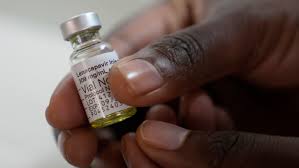
The twice yearly injection, which has shown near total effectiveness in preventing HIV infection, was delivered to Eswatini this week.
Eswatini is the first country in the world outside the United States to receive the jab the same year of approval.
The development was announced during a digital press briefing hosted by the US Department of State’s Africa Regional Media Hub.
Senior officials said the rollout forms part of the America First Global Health Strategy, launched in September, which aims to move away from traditional aid models and prioritise partnerships that expand access to advanced American medical technologies.
Brad Smith, Senior Advisor in the Bureau of Global Health Security and Diplomacy, said African countries were driving early demand for Lenacapavir, prompting the US to increase its 2026 order from 250 000 to 325 000 doses.
Together with the Global Fund, Washington has secured all 600 000 doses that Gilead Sciences will manufacture next year.
Speaking from Eswatini, Gilead Sciences Chief Executive Officer Daniel O’Day described the moment as historic, saying it set a “new bar for global access” as the drug reaches high incidence communities at no profit to the company.
Global Fund Executive Director Peter Sands said the collaboration showed how public-private partnerships could accelerate Africa’s access to new health technologies and support countries’ long-term transition to self funded health systems.
Responding to questions from Zimbabwean journalists, US officials said Eswatini’s programme would offer early operational lessons for countries preparing to adopt Lenacapavir.
Zimbabwe, which has extensive experience with oral pre-exposure prophylaxis (PrEP), is expected to benefit from the injection’s ability to reduce adherence barriers and stigma, particularly for adolescent girls and young women.
Officials also said the long acting drug is expected to play a key role in efforts to eliminate mother to child transmission, as it will prioritise women of reproductive age, including those pregnant or breastfeeding.
Production capacity is expected to rise sharply from 2027 as generic manufacturers enter the market, lowering costs and expanding access across the region.
