MARTIN MAWAYA
VICTORIA FALLS — UNICEF Zimbabwe has partnered with tourism operator Wild Horizons to roll out climate-resilient infrastructure in schools around Victoria Falls, in a move aimed at tackling water scarcity and the effects of climate change on education.
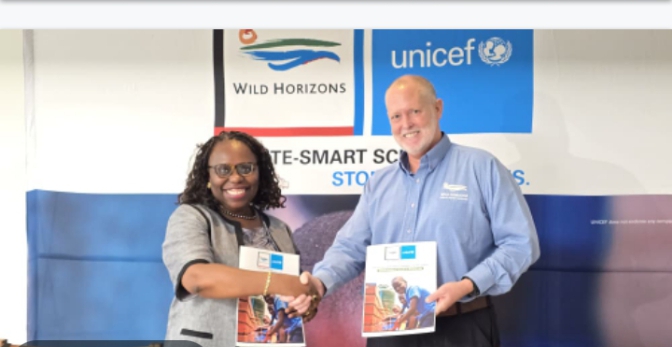
The two organisations yesterday signed a Memorandum of Understanding (MoU) to implement solar-powered water systems, renewable energy solutions and sustainable infrastructure in three schools; Mkhosana Adventist, Ndlovu and Sizinda.
UNICEF Zimbabwe representative Etona Ekole said the collaboration would help promote sustainable development while improving access to basic services for children and their communities.
“This partnership is a powerful example of how business and development can come together to create sustainable solutions for children and their communities,” Ekole said. “We are building models of climate resilience that can be scaled across Zimbabwe.”
Through the initiative, schools will receive clean and safe water, improved hygiene and sanitation facilities, and school gardens irrigated through solar-powered systems.
The gardens are expected to boost food security while promoting climate-smart agriculture.
The project will also support nearby health facilities, including the Ndlovu maternity ward, to improve maternal and child health outcomes through access to clean water.
Wild Horizons chief executive officer Gary Archer said the partnership reflected the company’s long-standing commitment to environmental protection and community empowerment.
“This partnership with UNICEF allows us to expand our commitment to healthier schools, stronger families and a greener future,” he said. “Together, we can create a model of resilience that inspires far beyond Victoria Falls.”
The initiative supports the government’s Clean Green Zimbabwe drive and contributes to the national climate adaptation agenda.
The model could be expanded to benefit the 44 schools already supported by Wild Horizons and replicated in other parts of the country.
It also dove tails into the Zambezi River Basin regional programme, which covers eight countries and benefits more than 40 million people.
The partnership will create youth employment opportunities through training in solar and water technologies, equipping young people with practical skills for sustainable livelihoods.
Wild Horizons, one of the largest tourism operators in Victoria Falls, has been active in supporting schools, health services and environmental conservation under its Corporate Social Responsibility (CSR) programme.
UNICEF, on the other hand, continues to work with partners such as KOICA, FCDO, TUI Care Foundation and Welthungerhilfe (WHH) to promote child rights and climate resilience across Zimbabwe.
