STAFF WRITER
Harare–Stanbic Bank has kickstarted a drive to donate reusable sanitary pads and undergarments to girls in remote schools countrywide.
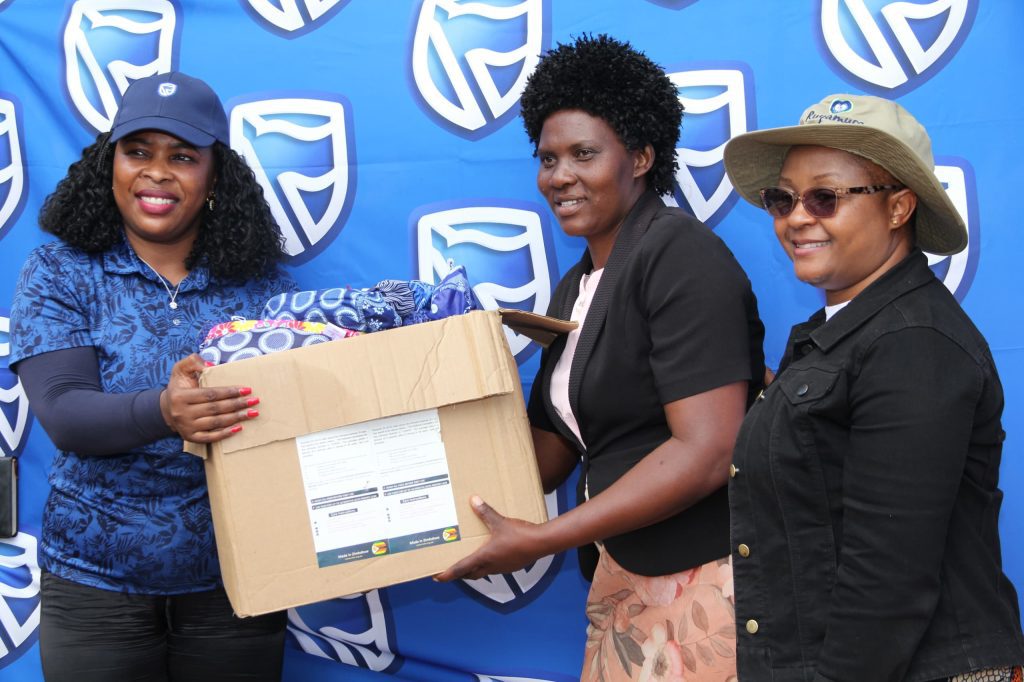
The bank’s first port of call was at Pumvuti Primary and Secondary Schools in Chipoli, Shamva District some 115 km North-West of Harare where they donated 133 packs.
The drive to donate reusable pads will be done in two phases at a total cost of US$15 000, up from US$10 000 in 2023. The first phase will cover remote schools in Buhera, Mrewa and Chipinge where over 800 girls from the selected institutions are scheduled to benefit.
Stanbic Bank Acting Head, Brand and Marketing, Tariro Memo said the second phase will see over 1 000 girls from remote schools in Mashonaland West, Matabeleland and Masvingo receive reusable pads.
Memo said the Standard Bank Group subsidiary is living up to its commitment to support the needs of the girl child by donating a packet containing four reusable pads and two undergarments to each of the girls countrywide.
Stanbic Bank is working in partnership with Talia Women’s Network, a non-profit making organisation which focuses on the propping up the welfare of women and girls and vulnerable communities.
Memo said Stanbic Bank has always deliberately targeted the welfare of underprivileged girl children as part of its Corporate Social Investment (CSI) strategy and that it is gratifying to see its partnership with Talia Women’s Network blossom over the years on the back of being like-minded in the quest to ensure that the needs of the girl child are met.
“Our institution is fully aware of the challenges posed by menstrual health to girls who come from underprivileged backgrounds and to that end we have come up with this package of reusable pads and undergarments to not only boost the confidence of the girls but ensure that they attend class throughout the year,” said Memo.
She said the prevailing economic environment prohibited parents and guardians to adequately meet the menstrual health needs of the girl child hence Stanbic Bank was standing in the gap.
Talia Women’s Network Director, Saliwe Zakariya took the girls through hygiene lessons, teaching them how to look after the pads as well as themselves.
“These pads need to be washed with clean water and soap and then hanged in the sun to dry and if properly taken care of can last two years,” said Zakariya.
Pumvuti Deputy Head, Shumirai Gwedegwe, commended Stanbic Bank for the donation saying this gesture would ensure 100 percent attendances throughout the year from the girls noting that some of the girls do not attend lessons during their cycles.
In 2023, Stanbic Bank donated sanitary pads to girls from Nyava Secondary School in Mashambanhaka, Shamva District while in 2022 the institution donated sanitary pads to girls from primary and secondary schools around the country.
In 2018 female employees from Stanbic Bank voluntarily raised 900 disposable pads for the girl child in commemoration of International Women’s Day and the institution complimented the gesture by adding 2 500 reusable sanitary pads.
Stanbic Bank has a comprehensive CSI strategy premised on sustainability targeting four pillars: Health; Environment and sanitation; education and sports.
