MARTIN MAWAYA
BULAWAYO-Zimbabwe’s smallholder farmers, long regarded as the backbone of national food security are undergoing a major transformation as government efforts to commercialize the Pfumvudza/Intwasa model begin to reshape rural livelihoods and strengthen climate resilience.

These farmers were synonymous with subsistence and food aid dependence.
But, they are now transitioning into self sustaining, meeting their basic food needs and emerging as income generating farming units.
This shift, officials say, marks one of the most profound structural changes in the smallholder sector in decades.
According to Chief Director for Agricultural Research, Development and Advisory Services (ARDAS), Medlinah Magwenzi, the government’s sustained support to nearly three million farmers under the Pfumvudza/Intwasa programme has not only stabilized food security but also sparked a wave of rural enterprise.
“Pfumvudza is no longer just about higher yields,” Magwenzi said. “It is becoming the seedbed of rural micro‑enterprises and value addition. Farmers are turning their surplus into structured business, and that is where the real transformation lies”.
From subsistence to enterprise
In districts such as Gokwe, Shamva and Zaka, farmers who once struggled to meet subsistence needs are now pooling their post harvest gains to purchase shellers, threshers, and solar dryers.
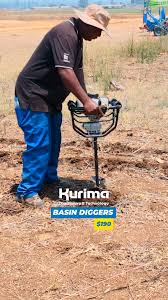
What started as a move to manage their own produce has evolved into profitable community based ventures offering post harvest services to neighbouring farmers.
Gokwe farmer Agrippa Mashavave described the shift as the emergence of a “new rural economy.”
“The success of Pfumvudza was its simplicity,” he said. “But its long‑term value comes when farmers move from growing for the pot to growing for the market.”
Farmers are increasingly processing sunflower into oil, groundnuts into peanut butter and maize into mealie‑meal, a strategy that reduce post harvest losses while boosting household incomes, he said.
Climate resilience at the centre
The agricultural transformation is being reinforced by climate‑smart practices, including mechanized conservation agriculture, borehole rehabilitation and dam repairs aimed at safeguarding production amid shifting weather patterns.
Magwenzi noted that these interventions form part of a broader national strategy to climate proof agriculture and boost long‑term productivity.
The Lands and Agriculture Ministry is also mapping agro‑ecological zones and expanding water harvesting systems to align production with local climatic conditions.
A new class of farmers
The shift toward self‑sufficiency is reshaping rural communities as smallholders farmers are forming cooperatives not only to share resources but to negotiate better grain prices and challenging long standing market inequalities.
Buoyed by improved yields, some farmers are now purchasing their own inputs, investing in irrigation and expanding their operations.
Their growing reliability is attracting microfinance institutions, which are developing new credit lines for Pfumvudza farmers based on produce inventories and purchasing histories.
Banks that once viewed rural agriculture as high‑risk are now seeing evidence of viability and repayment potential.
Economists say these trends could give rise to a “rural agrarian middle class” an asset owning population capable of reshaping Zimbabwe’s rural economy.
Already, transport services, solar energy providers, storage facilities and agro‑dealers are reporting increased demand.
Some analysts believe the emerging opportunities may even slow rural‑to‑urban migration as well as restoring economic vibrancy at village level.
However, experts warn that despite the gains, sustainable rural industrialization depends on strengthening value‑chain integration, improving market intelligence and expanding digital extension services.
Without these, momentum could stall before a fully developed rural industrial ecosystem is achieved.
As Zimbabwe prepares for the upcoming agricultural season, government officials say the country has moved beyond food relief and is now focused on driving rural prosperity.
“The story of Pfumvudza is no longer about food security alone,” Magwenzi said. “It is about dignity, innovation and rural prosperity, a full circle transformation powered by the ordinary farmer.”
