-as Gweru indaba exposes deepening barriers to inclusion
MARTIN MAWAYA
GWERU-People with disabilities (PWDs) have been urged to focus on their abilities and unite in pushing for their rights, amid concern that stereotypes, policy gaps and fragmented advocacy continue to undermine inclusion.
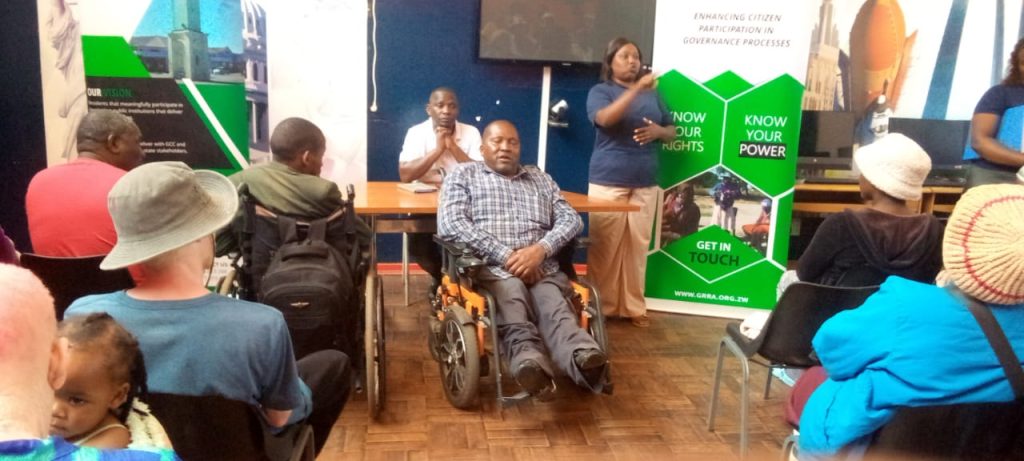
The call was made last Friday during a disability rights engagement meeting organized by the Gweru Residents and Ratepayers Association (GRRA).
GRRA executive director Cornillia Selipiwe warned that divisions within the disability movement were weakening the fight for reforms and improved service delivery.
Selipiwe said the Midlands disability sector lacked cohesion, a factor that undermined collective impact.
“You need to be united and avoid individualism when pushing for disability rights,” Selipiwe said. “In the Midlands province there is no oneness in the sector, and that affects your ability to influence policy or demand accountability.”
He, however, applauded Gweru City Council for expanding its disability desk to Mkoba administration offices, saying the gesture showed growing commitment to inclusion.
Despite this progress, participants said the city must broaden its engagement to marginalized groups, particularly the deaf community, which remains largely excluded from public consultations.
The meeting also heard that PWDs in the informal sector continue to face harassment, with municipal police confiscating their goods, forcing many into begging.
Disability rights advocate Jacob Ngwenya warned that PWDs were not spared from the country’s worsening drug and substance abuse crisis.
“Some members of our community are exposed to drugs because of the environments they operate in. Disability does not shield anyone from this scourge,” he said.
Another participant, Precious Mutumwa, called for a shift from the charity model to full social inclusion, arguing that handout driven approaches fuel stereotypes and abuse of privileges by some within the sector.
“We need to move from the charity approach to full inclusion,” she said. “The charity model has created a wrong perception in society.”
Participants also raised long-standing concerns over inaccessible public buildings, the absence of sign language interpreters in health facilities, limited access to assistive devices and high unemployment.
They called for unified advocacy, disability-responsive budgeting, better council engagement, training of municipal officers on disability rights, expanded social protection and increased community awareness.
Zimbabwe has more than 900 000 people with disabilities, according to ZimStat, yet most remain excluded from education, employment and social protection, with over 80% of citizens operating in the informal economy.
