MARTIN MAWAYA
GWERU-A US$157 000 one-by-three classroom block has been commissioned at Stanley Primary, a development expected to end hot-sitting and ease overcrowding at the school.

Midlands Minister of State for Provincial Affairs and Devolution Owen Ncube, who officiated at the ceremony, said the project was aligned with the National Development Strategy 2 (NDS2) thrust of strengthening education infrastructure to produce a skilled and innovative workforce.
He said the new facility would improve the learning environment and help enhance the delivery of the country’s transformative education model.
“This event dovetails with the Second Republic’s NDS2 pillar on science, technology, innovation and human capital development, which seeks to enhance a quality education system and build a knowledge-driven economy through modern education infrastructure,” Ncube said.
“Government adopted Heritage-Based Education 5.0 to move away from the colonial education system and ensure that learning produces practical solutions and innovations that drive national development.”
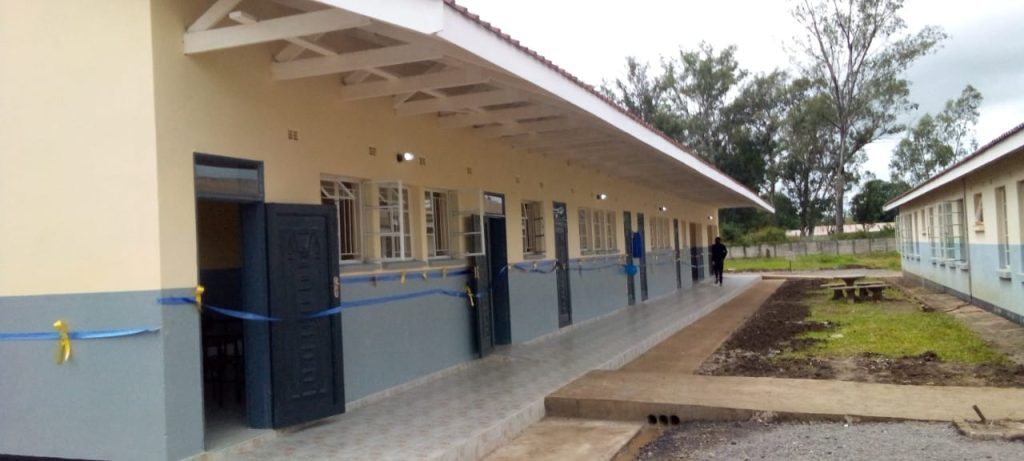
The minister commended the school community for mobilizing resources towards the project, saying improved infrastructure remained key to delivering quality education.
“The classroom block will significantly reduce overcrowding, eliminate hot-sitting and improve the learning environment for our children,” he said.
Stanley Primary School head Christine Magwegwe said the new facility marked a major milestone for the school, which has struggled with space constraints due to rising enrolment.
Established in 1928, the school now has 1 647 learners, 779 boys and 868 girls supported by 47 teachers and 15 student teachers.
Magwegwe said the classroom block would help restore normal learning schedules after years of hot-sitting, where pupils were forced to alternate learning sessions because of limited classroom space.
“Our goal was to provide a conducive learning environment for our pupils and to address the challenge of hot-sitting,” she said.
“This facility will alleviate overcrowding and ensure that every learner receives their full quota of learning time in a safe and comfortable environment.”
She said the school’s strong academic record demonstrated its commitment to excellence despite infrastructure challenges.
Over the past five years, Stanley Primary has consistently recorded high Grade Seven pass rates, including 96,5 percent in 2021, 93 percent in 2022, an impressive 99,49 percent in 2023, 97,63 percent in 2024 and 98,77 percent in 2025.
Magwegwe said the new block was constructed with assistance from the Zimbabwe Prisons and Correctional Service (ZPCS) under its community assistance programme.
The initiative reflects Government’s development philosophy which promotes community participation in national development.
She said while the school was celebrating the milestone, more infrastructure projects were still required to fully meet the needs of the growing learner population.
Among the projects in the pipeline are the construction of a two-storey classroom block, a library, ablution facilities, a school hall and the rehabilitation of sports grounds and a swimming pool.
“We remain committed to completely eliminating hot-sitting and creating a fully equipped learning environment that supports both academic and physical development of our learners,” Magwegwe said.
The commissioning of the classroom block comes as Government continues to invest in modernizing learning institutions across the country to support the Education 5.0 model, which emphasises innovation, industrialisation and heritage-based learning.
Education experts say improved infrastructure is critical in enabling schools to deliver practical and technology-driven learning envisioned under the national education transformation agenda.
