MARTIN MAWAYA
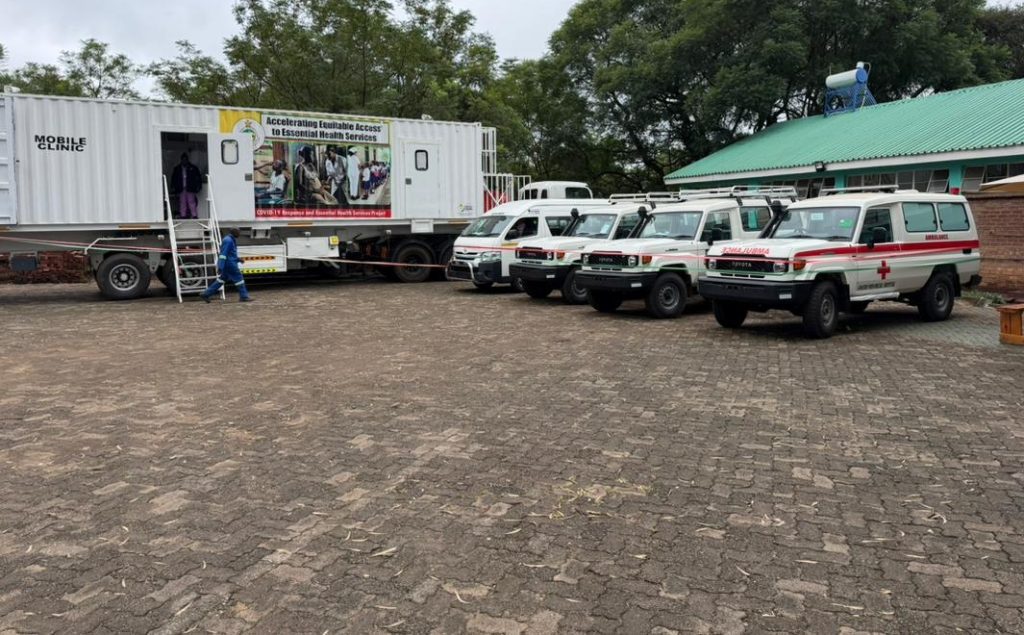
GWERU—Access to maternal and diagnostic health services in remote parts of Midlands province is set to improve following the commissioning of an integrated mobile outreach clinic at Gweru Provincial Hospital yesterday.

The mobile clinic, equipped with maternity equipment and an ultrasound scan, was commissioned alongside an ambulance, a staff minibus and two service vehicles allocated to Gweru and Zvishavane districts to support outreach health services.
Midlands Minister of State for Provincial Affairs and Devolution, Owen Ncube said the integrated mobile health unit will bring essential medical services closer to communities, particularly those in remote areas.
“The mobile outreach clinic is equipped with maternity equipment and a modern ultrasound scan, making it a mobile multi-purpose clinic where various medical procedures can be conducted,” Ncube said.
He added that providing services closer to communities would reduce the risks associated with transporting patients over long distances to access health care.
“Medical procedures can be performed aboard this clinic, thereby minimizing risks for patients who would otherwise need to travel to higher levels of care,” he said.
Mobile health outreach programmes have increasingly become a key component of Zimbabwe’s primary healthcare delivery, particularly in rural communities where access to hospitals, diagnostic services and specialist care remains limited due to long travelling distances, poor transport networks and shortages of medical personnel.
Health experts say mobile clinics play a critical role in bridging the healthcare gap in underserved communities by bringing services such as antenatal care, child immunisation, family planning, disease screening and basic laboratory services closer to patients.
The World Health Organization (WHO) recognises mobile clinics as an effective strategy for expanding universal health coverage, particularly in low-resource settings where fixed health facilities are sparse.
Mobile outreach programmes are widely used to improve maternal health outcomes, increase early disease detection and strengthen community-based healthcare systems.
Zimbabwe has increasingly adopted this approach as part of its efforts to strengthen primary healthcare delivery in line with the National Health Strategy (2021–2025), which prioritises equitable access to essential health services and reducing maternal and child mortality.
The new mobile unit will support the Integrated Outreach Clinic programme run by the Ministry of Health and Child Care in partnership with UNICEF, the World Health Organization and Population Services Zimbabwe, which delivers primary healthcare services to underserved communities.
Such initiatives are also aligned with the global Sustainable Development Goals (SDGs), particularly SDG 3, which seeks to ensure healthy lives and promote well being for all by improving access to quality healthcare services.
The additional ambulance and service vehicles are also expected to strengthen emergency referrals and improve mobility for healthcare teams conducting outreach services across districts.
Provincial Medical Director Dr Mary Muchekeza said the mobile clinic will be deployed across Midlands communities as part of efforts to expand access to maternal care, diagnostic screening and other essential health services.
“The mobile clinic is an integrated unit which will cater for all basic medical services,” she said, adding that it is a multi-purpose facility where several procedures can be conducted under one roof.
Muchekeza added that the clinic will enhance access and utilisation of health services while bringing relief to rural communities that have long been forced to walk long distances to seek medical attention.
Public health specialists, however, say mobile outreach programmes must be complemented by sustained investment in rural health infrastructure, improved road networks, adequate staffing and reliable medical supplies to maximise their impact.
They argue that scaling up community health worker programmes, increasing the number of mobile units and strengthening digital health systems for patient records and referrals could further improve healthcare access in remote areas.
With large sections of Midlands province characterised by dispersed settlements and limited health facilities, authorities say expanding mobile outreach services will be key to ensuring vulnerable communities receive timely medical care.
