-renew call for disposable diapers ban
MARTIN MAWAYA
GWERU-On a quiet Friday morning in the affluent suburb of Woodlands, Gweru, a group of residents mostly women gathered for a community clean-up campaign organized by the River Valley Group of Companies.
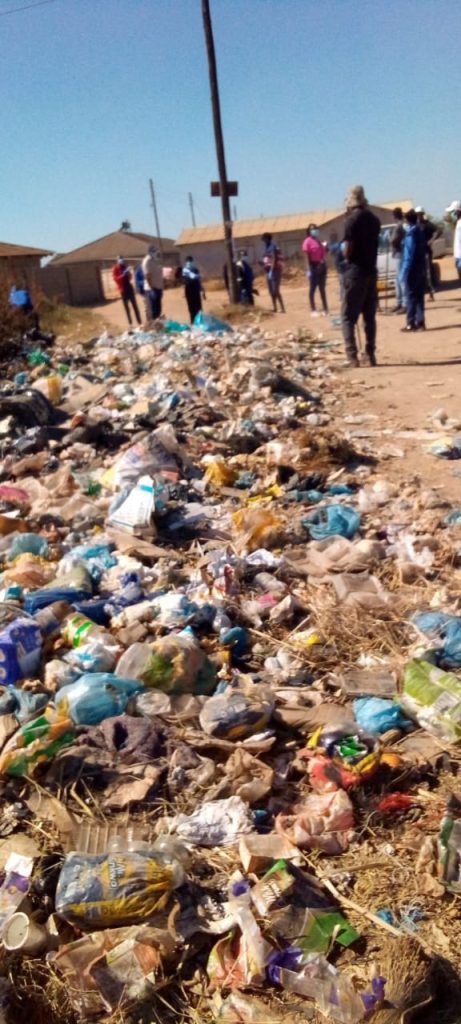
As they cleared heaps of garbage from illegal dumpsites, the women reignited calls for a total ban on disposable diapers, citing mounting environmental degradation, illegal dumping, and blocked sewer and drainage systems.
Since 2015, government through the Environmental Management Agency (EMA) has been weighing a nationwide ban on disposable diapers commonly referred to as “pampers” in Zimbabwe.
These single-use baby garments allow children to deposit their excretion without using the ablution facilities.
While convenient, they have become a symbol of an escalating waste management crisis.
Globally, disposable diapers account for around 4% of solid waste in landfills. Locally, the situation is dire.
“Pampers are a menace, we are suffocating in waste,” said Barbra Siyamusiya, a resident of Woodlands Phase 2. “They are a health risk. Everywhere you go, you see them strewn across streets, drains, and open fields. They must be banned.”
But not everyone supports a blanket ban.
In Mtapa, a high-density suburb, single mother Lorraine Matipira scoffed at the proposal.
“I have two children under three, no running water, and I work six days a week. Where do I find the time or resources to wash napkins every day especially with the water shortages,” asked Matipira.
Her sentiment shows a deeper divide within these communities, between residents who prioritize the environment and those struggling with daily survival.
Yet, the environmental impact remains undeniable.
A single baby can use between 4 to 5 diapers a day, translating to nearly 1,800 diapers per year, each taking centuries to decompose.
The Gweru City Council has repeatedly blamed disposable diapers for drain and sewer blockages.
“We are struggling with people dumping diapers into the drainage system, and it’s costing the city significant revenue to clear these blockages,” said Ward 6 Councilor Lovemore Choto, during a Women’s Coalition of Zimbabwe (WCoZ) engagement meeting with residents.
Still, questions linger: Will banning diapers alone stop illegal dumping or solve Gweru’s broader waste management problems.
Experts argue that focusing on banning diapers without addressing the city’s structural failures in waste collection and education misses the bigger picture.
While alternatives such as biodegradable nappies or cloth diapers exist, their high costs make them inaccessible to many families living below the poverty datum line in a tanking economy.
The WCoZ Gweru chapter has been conducting educational workshops on the safe disposal of diapers.

“There’s no point in saving the planet by punishing the vulnerable,” said Merjury Makunere, WCoZ Gweru chapter chairperson.
“This is about inclusion, not imposition. We are working with local authorities to educate and raise awareness so we can protect the environment while supporting the needs of all residents.”
Makunere added: “In a city where inequality seeps into every drain and dumpsite, creating a cleaner Gweru must start with empathy as much as it does with policy.”
Environmentalist and climate change expert Peter Makwanya stressed that disposable diapers contribute to a broader carbon footprint problem.
“They don’t fit into the circular economy because they’re not recyclable. Diaper handling and disposal literacy is crucial not just for the environment but for public health and human rights,” he said.
Research from Zimbabwe Open University (ZOU), conducted by Professor Renigious Mangizvo, Abigail Lumbe, and Alex Sibanda, also recommended that the manufacturers should include environmentally friendly disposal instructions on packaging.
Other study findings estimated that soiled diapers constitute 30 to 50 percent of waste found at illegal dumpsites.
As Gweru’s residents continue to grapple with the waste management challenges, the path to a cleaner, greener city must balance environmental urgency with social realities, added social justice experts.
