MARTIN MAWAYA
HARARE-The Centre for Research and Development (CRD) has issued a scathing warning to Parliament, arguing that the proposed Constitutional Amendment Bill (No. 3) could entrench executive power and accelerate the capture of Zimbabwe’s natural resources by political elites.
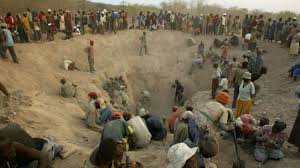
In a position paper submitted to Parliament on March 27 during ongoing public hearings on the bill, the civic organisation said the proposed amendments risk reversing democratic gains made under the 2013 Constitution and weakening oversight over the country’s mineral wealth.
CRD said the bill, which among other changes proposes extending presidential and parliamentary terms from five to seven years, undermines the accountability mechanisms that were introduced to ensure transparent governance of natural resources.
“The amendments risk turning Zimbabwe’s mineral heritage into a tool for elite enrichment rather than national development,” the organisation said.
According to CRD, the proposed changes reflect a broader historical pattern dating back to independence in 1980 in which constitutional amendments have been used to centralise power while weakening institutions meant to hold leaders accountable.
The minerals watchdog NGO traced this trajectory to Constitutional Amendment No. 7 of 1987, which replaced the parliamentary system with an executive presidency with no term limits, concentrating authority in a single office.
CRD argued that subsequent political developments, including the fast-track land reform programme, the governance crisis of Marange diamond fields, and repeated constitutional amendments, have often been accompanied by allegations of patronage and opaque management of national resources.
The organisation said the controversial handling of Marange diamonds between 2010 and 2014 illustrated the consequences of weak oversight.
Official figures show Zimbabwe exported more than US$1.7 billion worth of diamonds during that period, yet less than US$200 million reached the national treasury in taxes and dividends.
“This massive disparity confirmed the existence of a parallel system where revenues meant for the fiscus were diverted to sustain patronage networks and off-budget financing,” the paper states.
CRD also linked governance weaknesses to broader economic losses, citing estimates that Zimbabwe lost about US$32.1 billion through illicit financial flows between 2000 and 2020.
The organisation warned that the latest constitutional proposals could deepen these vulnerabilities by weakening institutions responsible for oversight of elections, the judiciary and public administration.
Among the changes criticised by CRD are provisions that would transfer key electoral functions from the Zimbabwe Electoral Commission (ZEC) to the Registrar-General’s office and introduce a system where the President could be elected by a joint sitting of Parliament rather than through direct popular vote.
The group said such measures would erode democratic accountability and reduce citizens’ influence over the management of national resources.
“Office bearers who no longer face regular electoral review have little incentive to curb illicit financial flows that already cost the country billions annually,” CRD said.
The organisation also raised concern over proposed changes affecting judicial appointments, arguing that removing public interviews and reducing the role of independent bodies in the selection process could weaken judicial independence.
CRD warned that this could create a legal environment where politically exposed persons involved in the extractive sector operate with minimal scrutiny.
The group further argued that the bill threatens the constitutional principle of devolution by increasing presidential influence over Parliament and provincial representation, potentially marginalizing communities in resource rich regions.
It said rural communities already face vulnerability to displacement and environmental damage linked to mining operations, while weak enforcement of existing laws has allowed illegal and destructive activities such as riverbed mining to persist.
CRD cited ongoing environmental degradation and gold smuggling estimated at more than US$1.2 billion annually, as evidence that stronger oversight rather than constitutional changes is needed.
The organisation urged Parliament to reject the bill and instead prioritise legislation that promotes transparency and equitable sharing of natural resource revenues.
“Constitutional Amendment Bill (No. 3) is a strategic shield for the beneficiaries of impunity,” the group said.
“It ensures that the extraction of Zimbabwe’s wealth remains opaque while environmental lawlessness goes unpunished.”
CRD called on lawmakers to defend the provisions of the 2013 Constitution, which it described as a “people-driven charter” designed to strengthen accountability and protect national resources.
Public consultations on the proposed amendment are continuing before Parliament vote for the bill which is being pushed by Zanu PF as part of its 2024 Bulawayo resolution to extend President Mnangagwa’s constitutional term of office to 2030.
Civic organsations are fiercely fighting the amendment arguing that the changes must be taken to a referendum just like the 2013 Constitution.

