MILLICENT HUNGWE
At the opening of the 85th Ordinary Session of the African Commission on Human and Peoples’ Rights held in Banjul, The Gambia, on October 21, the President of the Pan-African Parliament (PAP), Chief Fortune Charumbira, delivered a stirring message that blended sorrow, warning, and hope.
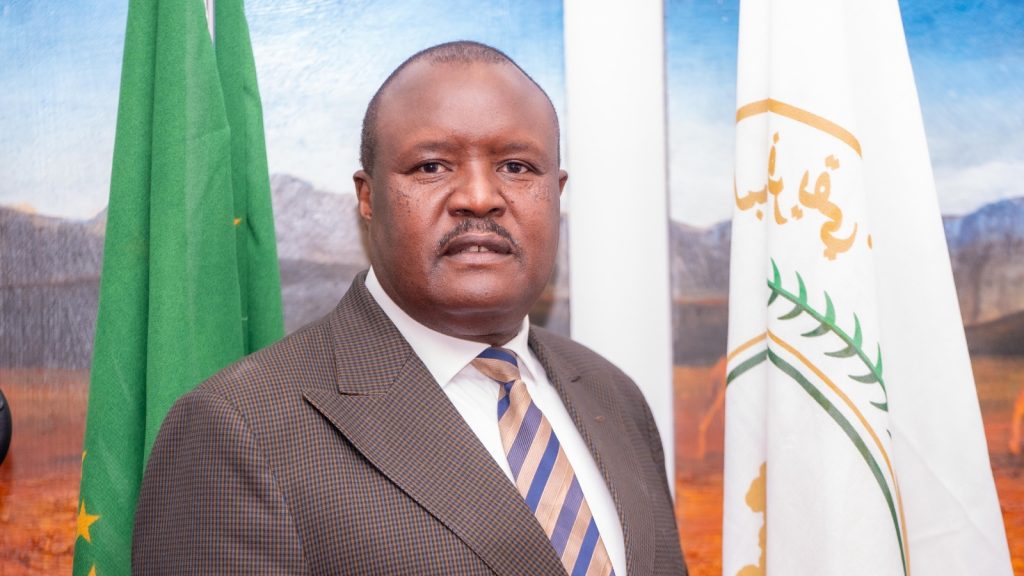
Standing before an audience of commissioners, diplomats, and human rights advocates, Chief Charumbira did not mince his words.
He began his address with a heavy heart, “It is with great sadness that I speak today,” he said solemnly. “Despite Africa’s commitment to silence the guns, the guns seem to be sounding louder than ever.”
His tone reflected the frustration of a continent caught between its aspirations for peace and the recurring drumbeats of instability.
The most recent flashpoint, the military takeover in Madagascar loomed large in his reflections.
The Pan African Parliament President urged African leaders to confront uncomfortable truths, the events in Madagascar, he argued, were not isolated.
They were part of a broader wave of youth-led uprisings reshaping the world, from Nepal and Bangladesh to Sri Lanka and Morocco.
Across continents, Generation Z tech-savvy, restless, and disillusioned, has risen to challenge the old order. Africa, Chief Charumbira warned, is no exception.
“The Gen Z protests have two defining features, they are led by young people disillusioned with their governments, and they are organized through social media, the very space where the youth find their voice,” he said.
He cited alarming statistics from the Mo Ibrahim Foundation, sixty percent of Africa’s population is under 25, the youth population will grow by 180% before the end of the century, even as jobs and opportunities remain scarce and by 2100, Africa’s youth could outnumber Europe’s entire population — twice over.
“This explosion in youth numbers is not matched by economic growth, we are raising a generation full of energy, but empty of opportunities,” he noted gravely.
In countries like South Africa, where over half of young people are unemployed, or in regions where 30 million youths enter the job market each year but only 3 million jobs are created, the warning signs are clear.
Chief Charumbira stressed that the solution lies in inclusivity, especially within the human rights agenda.
“Human rights must be inclusive, equitable, and just, there should be nothing for the youth without the youth,” he said.
He reminded the delegates that peace and development would remain elusive unless women and young people, Africa’s largest and most vibrant demographic, are given a seat at the table.
Turning his focus to collaboration, Chief Charumbira reaffirmed the Pan African Parliament’s commitment to work hand-in-hand with the African Commission on Human and People’s Rights, often referred to as the Banjul Commission.
“There can be no meaningful development, peace, or integration without respect for human dignity and the rule of law,” he declared.
He pledged that the Pan African Parliament would intensify its advocacy to ensure that African Union member states not only ratify but also domesticate human rights instruments in their national laws.
Stronger synergy between PAP and the Commission, he said, would amplify Africa’s voice in protecting its citizens.
As he concluded, Chief Charumbira’s tone shifted from concern to conviction, a leader rallying his peers to act.
“Let us work together to build an Africa where justice, equality, and dignity are not aspirations, but lived realities,” he urged.
He closed his message with a multi-lingual salute that echoed across the hall, “Thank you! Merci Beaucoup! Asante Sana! Shukran! Obrigado!”
