Rutendo Chirume
MASVINGO – Zimbabwe’s public debt, now at around US$23 billion, has reached unsustainable levels that are threatening economic growth, public service delivery and national development, delegates at the 8th Zimbabwe Annual Debt Conference have warned.
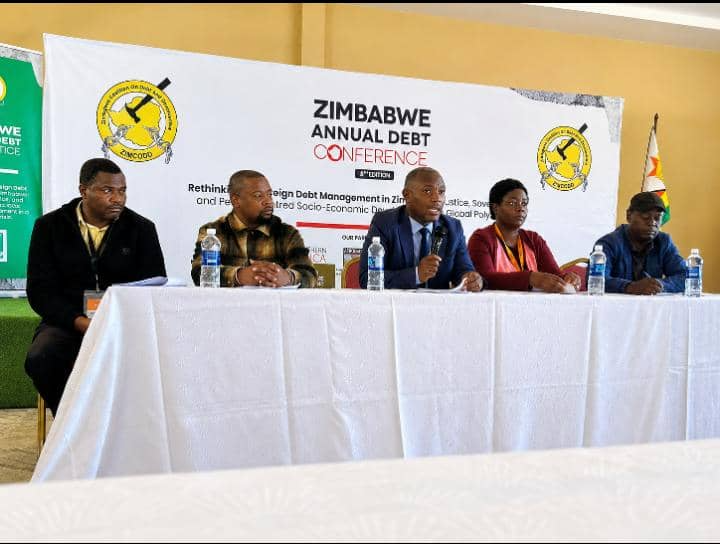
The conference, organised by the Zimbabwe Coalition on Debt and Development (ZIMCODD), ended on July 16 at Urban Lifestyle Hotel in Masvingo after two days of deliberations involving government officials, members of parliament, economists, civil society organisations, development partners and academics.
Held under the theme, “Rethinking Sovereign Debt Management in Zimbabwe: Justice, Sovereignty and People-Centered Socio-Economic Development in a Global Polycrisis,” the gathering called for urgent reforms to improve debt management, strengthen transparency and restore fiscal sustainability.
Presenting the conference declaration, ZIMCODD executive director John Maketo said Zimbabwe’s growing debt burden continues to weigh heavily on the country’s development ambitions.
“Zimbabwe’s Public and Publicly Guaranteed debt, estimated at between US$21 billion and US$23 billion, continues to constrain structural transformation, limit fiscal space, reduce investor confidence and compromise the State’s ability to fulfil its constitutional and developmental obligations,” said Maketo.
He said domestic debt, estimated at nearly US$10 billion, has become an increasing source of fiscal risk and requires urgent policy action.
Delegates heard that debt servicing now consumes around 11 percent of Government’s mobilised revenue, leaving fewer resources for health, education, infrastructure development, social protection and local authorities.
Maketo said the conference identified weak public financial management as key drivers of Zimbabwe’s debt crisis.
“Corruption, procurement irregularities, exchange-rate distortions and the accumulation of government arrears as key drivers of Zimbabwe’s debt crisis,” read Maketo citing global challenges including climate change, geopolitical tensions, armed conflicts and declining access to affordable development finance as worsening the country’s debt vulnerabilities.
The conference’s declaration criticised the continued reliance on loans to finance climate action in developing countries.
“Climate finance continues to be delivered predominantly through loans rather than grants, effectively transferring the costs of a crisis Africa did little to create onto already indebted countries,” the declaration reads.
Among the resolutions adopted, delegates called on Government to undertake comprehensive public debt audits, improve transparency in public borrowing, strengthen parliamentary oversight and reinforce institutions responsible for accountability.
They also urged authorities to tighten public financial management systems, eliminate corruption and financial leakages, curb illicit financial flows and ensure future borrowing is directed towards productive investments capable of stimulating economic growth.
Delegates further appealed for the protection of spending on health, education and social protection during debt restructuring efforts, saying vulnerable communities continue to bear the greatest burden of the country’s debt crisis.
The conference also backed Africa’s push for a United Nations Framework Convention on Sovereign Debt, advocating for fair debt restructuring mechanisms, broader debt relief and increased climate financing through grants instead of loans.
Speaking after the adoption of the declaration, ZIMCODD board chairperson Rosewita Katsande said sustainable debt resolution demands collective action from Government, Parliament, development partners, civil society, the private sector, and citizens.
“Debt justice is indispensable to national sovereignty, democratic governance, human dignity and sustainable development. We call upon all stakeholders to work collectively in implementing this declaration and accelerate debt resolution in a manner that restores public trust, expands fiscal space and advances inclusive and sustainable development,” Katsande said.
The conference concluded with delegates reaffirming their commitment to promoting transparent debt governance, responsible borrowing, stronger domestic resource mobilisation and reforms to the global financial architecture to support Zimbabwe’s long-term economic recovery.