TONY PHIRI
MASVINGO: Great Zimbabwe University (GZU), in partnership with SCOPE Zimbabwe and with funding support from the United Nations Development Programme (UNDP) through the Seeding Local Cultures Programme, has launched an ambitious drive to transform higher education into a catalyst for climate resilience, sustainable food systems and community transformation through the implementation of Integrated Land Use Design (ILUD), permaculture and agroecology.
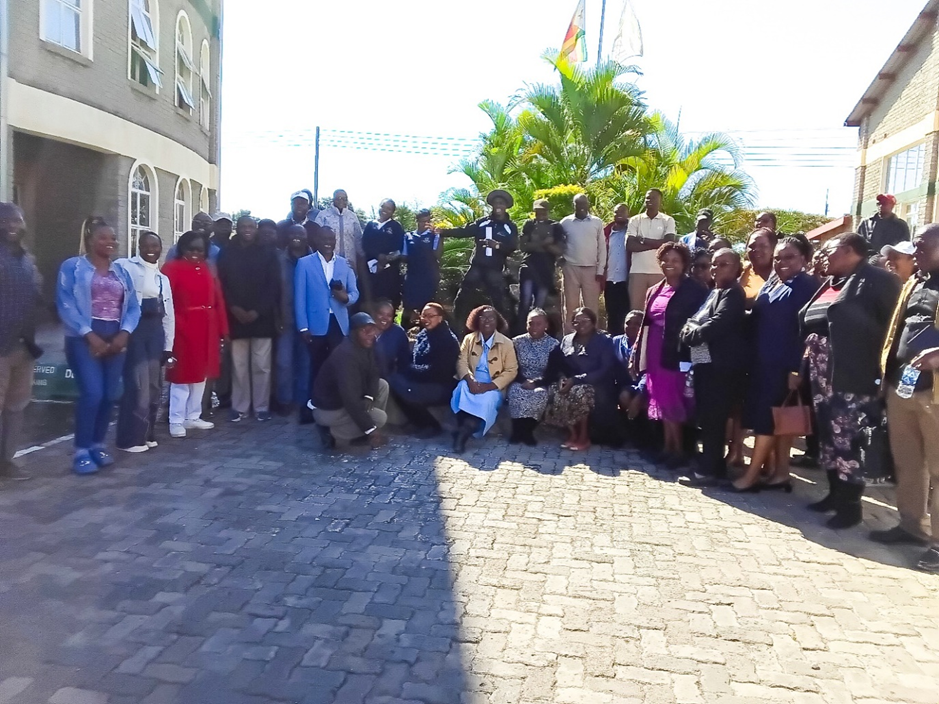
The two-day ILUD Implementation Workshop, held at Great Zimbabwe University from 27 to 28 June 2026, brought together many participants including lecturers, students, ancillary staff and community representatives to reimagine university landscapes as productive learning spaces that respond to the realities of climate change, food insecurity and environmental degradation.
The workshop forms part of wider efforts to support Zimbabwe’s National Development Strategy 1 and 2 (NDS1 and NDS2) priorities on food and nutrition security, environmental protection, climate adaptation, innovation and human capital development, while advancing the country’s Heritage-Based Curriculum (HBC) agenda that seeks to produce innovators, industrialists and problem solvers grounded in local realities.
Participants received practical training in Integrated Land Use Design, agroecology and permaculture, covering landscape mapping, water harvesting, soil regeneration, waste management, food forest establishment, organic fertiliser production, nursery development and ecological design.
As part of the implementation process, participants established food production systems and planted fruit trees including avocado, mango, banana and apple trees, creating the foundation for long-term campus food security, biodiversity restoration and experiential learning opportunities for future generations of students.
Dr Kudakwashe Mapetere, Principal Investigator for the Seeding Local Cultures Programme at Great Zimbabwe University, said the partnership with SCOPE Zimbabwe had fundamentally changed how the institution views its role in climate action and sustainable development.
“The partnership with SCOPE Zimbabwe and the ILUD programme has awakened the university to its critical role in embedding Education for Sustainable Development within its academic programmes, and the institution has embraced this opportunity with enthusiasm and commitment.”
“There is tremendous excitement across the Great Zimbabwe University community to implement ILUD and prepare graduates who are capable of championing climate resilience and sustainable cultural practices in the communities they will serve after graduation.”
“We are optimistic that this partnership will create opportunities for high-quality scholarship, research publications and communities of practice that strengthen climate resilience and sustainable development in Zimbabwe and beyond.”
Dr Mapetere serves as the Principal Investigator for the Seeding Local Cultures Programme, which seeks to promote locally relevant educational approaches that reconnect learning institutions with communities, culture and ecosystems.
Dr Mashoko, Chairperson of the Curriculum Studies Department at Great Zimbabwe University, described ILUD as a transformative educational model that bridges the gap between classroom learning and real-world problem solving.
“ILUD promotes a practical and experiential approach to teaching and learning by enabling participants to implement the concepts they acquire during training.”
“The approach encourages learners to draw from their everyday experiences, indigenous knowledge systems and cultural practices to identify challenges and develop practical solutions using locally available resources.”
“By placing culture, experience and community knowledge at the centre of learning, ILUD empowers students to become innovators and change agents capable of responding to contemporary environmental and social challenges.”
Workshop facilitator Tapera Tapera, a Building Technology teacher at Mazungunye High School in Bikita, SCOPE Zimbabwe focal teacher and one of Zimbabwe’s leading ILUD practitioners, said educational institutions possess enormous untapped potential to become models of sustainability and resilience.
“Schools and universities have the potential to become living classrooms where every landscape feature becomes a learning opportunity and every learner becomes part of the solution.”
“Through ILUD, institutions can transform unused spaces into productive systems that harvest water, regenerate soils, improve nutrition and strengthen resilience against climate shocks.”
“What makes this approach powerful is that it combines indigenous knowledge with modern ecological design principles, allowing communities to solve local challenges using local knowledge and local resources.”
The workshop demonstrated growing demand for practical, community-responsive education that prepares learners not only for employment but also for leadership in sustainable development and environmental stewardship.
Participants overwhelmingly praised the hands-on nature of the training and recommended longer implementation periods to allow for deeper practical engagement and continued mentorship.
The initiative also showcased inclusivity in action, with participants from diverse backgrounds and abilities actively contributing to landscape design, tree planting and implementation activities, reinforcing the principle that sustainable development must leave no one behind.
For SCOPE Zimbabwe, the Great Zimbabwe University initiative represents a growing movement to transform educational institutions into centres of innovation, climate action and sustainable food systems development.
The organisation continues to work with schools, universities, communities and government institutions across Zimbabwe to promote Integrated Land Use Design, agroecology and permaculture as practical tools for advancing the Heritage-Based Curriculum and national development priorities.
As climate change, water scarcity and food insecurity increasingly threaten livelihoods across Southern Africa, partnerships such as the one between Great Zimbabwe University and SCOPE Zimbabwe are demonstrating that the future of education lies not only in classrooms and lecture halls, but also in gardens, food forests, water harvesting systems and communities working together to create resilient futures.
SCOPE Zimbabwe has called upon development partners, research institutions, donors and the private sector to support the scaling up of ILUD initiatives across Zimbabwe’s education sector to accelerate progress towards climate resilience, food sovereignty and sustainable development.